


Health And Beauty
What Do Tomato Breeders Actually Select For? A Look Inside Modern Variety Development

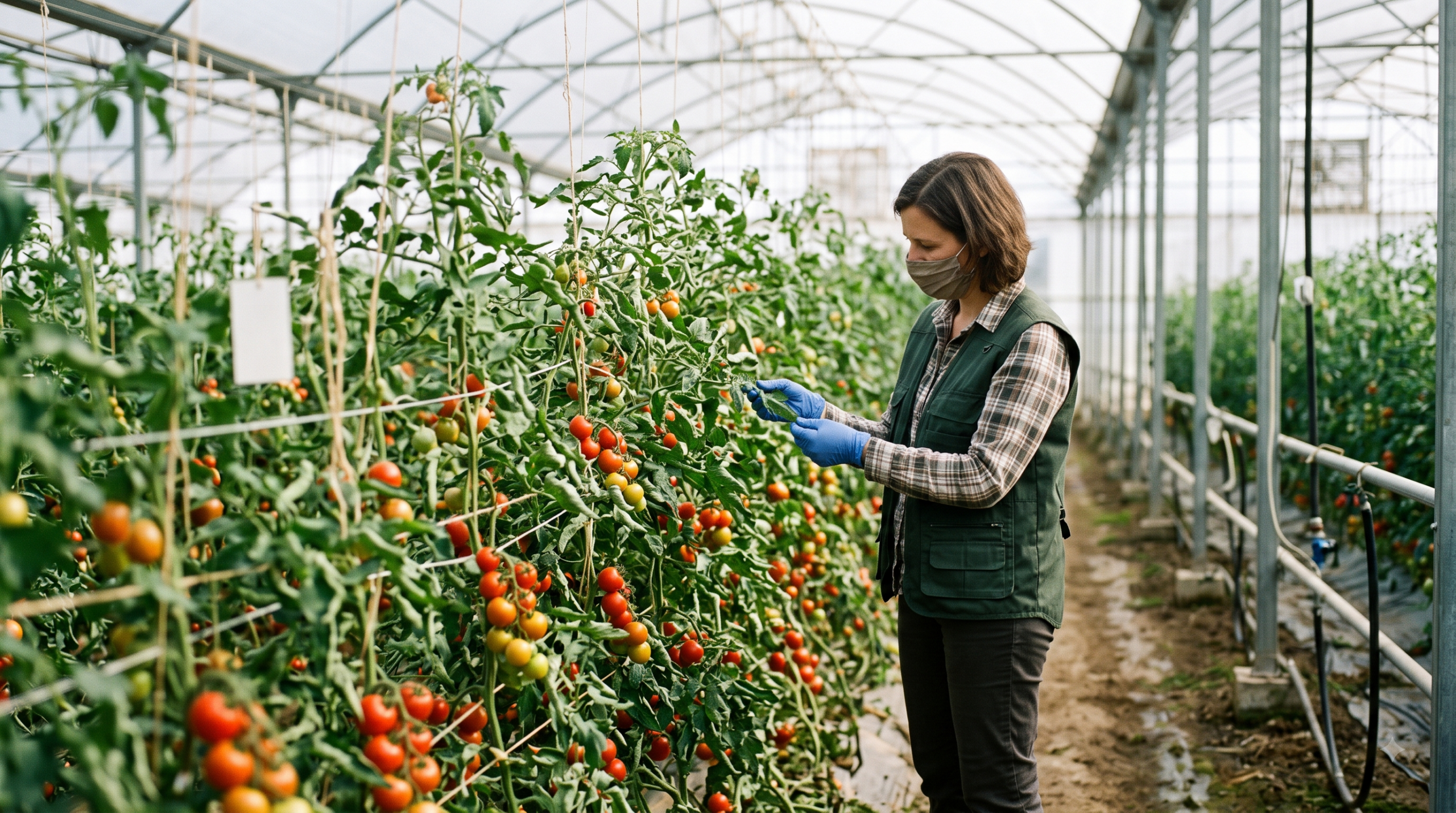
| Key Takeaways
• Tomato breeders select primarily for sugar content (Brix), fruit size consistency, disease resistance, and post-harvest shelf life. • Tomato Brown Rugose Fruit Virus (ToBRFV), first identified in Israel in 2014, has overcome older resistance genes and made virus tolerance a top breeding priority worldwide. • A Brix floor of 9.0 or higher is now a common breeding target, with some portfolios earning independent recognition such as a Superior Taste Award. • Breeding strategy differs by tomato format: roma-type varieties prioritize dense, low-moisture flesh for cooking, while snacking and specialty types prioritize sugar content for fresh eating. |
What do tomato breeders actually select for?
Tomato breeders select primarily for sugar content, fruit size consistency, disease resistance, and shelf life, since those four traits determine whether a variety can move from a research plot into commercial greenhouse or field production. Modern breeding programs report targeting Brix values (a measure of sugar content) of at least 9.0 across a variety’s portfolio, alongside fruit sizes ranging from roughly 10 grams for snack formats up to 100 grams for larger specialty types. Those targets sit alongside agronomic goals like compact, vigorous plant structure that reduces pruning labor, and reliable fruit set even when greenhouse temperatures spike during heat stress. A current view of that selection work is visible across current tomato variety breeding programs, where sweetness, size range, and resistance traits are bred into distinct product lines rather than a single generic tomato. None of these traits are selected in isolation, either: a fruit that hits a high Brix target but cracks under normal handling, or a plant that resists disease but sets fruit unreliably in a heat wave, still fails commercially even if it succeeds on paper against a single criterion.
Why has disease resistance become a priority for tomato breeders?
Disease resistance has become a top breeding priority because a single pathogen, Tomato Brown Rugose Fruit Virus (ToBRFV), has overwhelmed the resistance genes that protected greenhouse tomato crops for decades. According to a University of Massachusetts Extension fact sheet on the virus, ToBRFV was first identified in Israel in 2014 and has since been confirmed in greenhouse operations across the Middle East, Europe, and parts of Asia and North America, in part because the virus is mechanically stable and spreads easily through routine plant handling. The same fact sheet notes there are currently no tomato or pepper cultivars considered truly immune, which is why breeding programs describe resistance in terms of “strong, reliable tolerance” under high-pressure virus conditions rather than absolute immunity. The virus also transmits through bumblebee pollination and, at a very low rate, through infected seed, which means resistance breeding has to hold up against multiple transmission routes at once rather than a single point of entry a grower could simply control through sanitation. That combination, no fully immune cultivars and several transmission paths, is why ToBRFV tolerance has moved from a secondary consideration to one of the first traits screened when a new tomato line is evaluated for greenhouse release.
How is sweetness measured, and why does it matter to breeders?
Sweetness in tomato breeding is measured in Brix, a scale that reflects the concentration of dissolved sugars in the fruit’s juice, and it matters because Brix is one of the few flavor traits that can be scored objectively rather than by taste panel alone. Portfolios built around a Brix floor of 9.0 or higher have gone on to earn independent recognition, including a Superior Taste Award from the International Taste Institute, a formal signal that the sweetness target translates into a flavor result blind tasters actually rate highly. That sweetness focus runs across product lines, including specialty tomato selections bred for vibrant color alongside high sugar content.
Why does fruit size range matter to different buyers?
Fruit size range matters because it determines which market segment a variety can serve: current breeding portfolios span roughly 10 grams per fruit at the snacking end up to 100 grams at the larger specialty end, and those two ends sell into completely different retail contexts. A 10-gram fruit is built for a lunchbox or a snack bowl, judged almost entirely on sweetness and convenience, while a 100-gram fruit is more likely to be sliced for a sandwich or salad, where texture and juiciness weigh in alongside flavor. Breeding across that full range, rather than optimizing a single size, lets a program answer multiple retail categories, snacking, cocktail, and slicing, from one underlying flavor and disease-resistance platform instead of starting over for each format.
How long does it typically take to bring a new tomato variety to market?
Bringing a new tomato variety to market typically requires evaluating candidate lines across several consecutive growing seasons and more than one climate, since a trait that performs well under one season’s light and temperature conditions needs to hold up consistently before it’s considered commercially reliable. That multi-season testing matters most for the traits buyers care about most, sugar content, disease tolerance, and fruit set under heat stress, because each of those can vary significantly between a mild growing season and a difficult one. Programs that skip this multi-cycle testing risk releasing a variety that looked strong in a single trial but underperforms once it reaches commercial greenhouses facing a wider range of real-world conditions.
What agronomic traits matter to breeders beyond flavor?
Beyond flavor, breeders weigh plant structure, fruit set reliability, and post-harvest firmness, since a sweet tomato that collapses in transit or fails to set fruit under heat stress never reaches a shelf at all. Compact, vigorous plant architecture reduces the pruning labor a grower needs per square meter of greenhouse space, while firmness and extended shelf life reduce shrink between harvest and retail display. These practical, non-flavor traits are frequently the deciding factor when a grower chooses between two varieties that taste similarly good, since labor and shrink costs compound across an entire season’s harvest.
How does breeding strategy differ across tomato formats like roma and specialty types?
Breeding strategy shifts by format: roma-type tomatoes are bred primarily for dense flesh and low moisture suited to sauces and cooking, while specialty and snacking formats are bred for eating fresh, prioritizing sugar content and thinner skin over flesh density. roma-style tomatoes illustrate the cooking-format end of that spectrum, bred for firmness and reduced water content rather than the highest possible Brix. Independent industry coverage of a recent industry look at Brix-focused tomato breeding frames this format-by-format approach as the direction most greenhouse breeding programs are now taking, rather than chasing a single all-purpose tomato.
Frequently Asked Questions
What is the main trait tomato breeders select for first?
Most modern breeding programs prioritize disease resistance first, particularly to Tomato Brown Rugose Fruit Virus, because a variety that cannot survive a virus outbreak never reaches commercial evaluation regardless of its flavor.
What is Brix and why do tomato breeders track it?
Brix is a measurement of dissolved sugar content in a fruit’s juice, and breeders track it because it gives an objective, repeatable score for sweetness that can be compared across varieties and growing seasons.
Is there a fully virus-resistant tomato variety available today?
No, according to university extension research there are currently no tomato or pepper cultivars considered fully immune to Tomato Brown Rugose Fruit Virus; breeding programs instead select for strong tolerance under high-pressure conditions.
Why do roma tomatoes taste different from snacking tomato varieties?
Roma-type tomatoes are bred for dense, low-moisture flesh suited to cooking and sauces, while snacking varieties are bred for higher sugar content and thinner skin intended for eating fresh.


|
Key Takeaways
|
Why did tomato breeders see an opportunity in an already crowded category?
It might seem counterintuitive to invest in developing more tomato varieties when retail shelves already carry an abundance of segments, but the specific gap tomato breeders kept hearing about wasn’t variety count, it was consistency and quality of taste. Despite the sheer number of tomato options already available, the demand for a genuinely improved and reliably consistent flavor experience came up repeatedly in industry conversations. That’s a materially different challenge than simply adding another shape or color to the shelf; it requires breeding specifically for taste as a primary trait, not a secondary consideration behind yield, shelf life, or appearance.
What does an innovative specialty tomato collection actually prioritize?
This is where tomato innovation truly shows up in practice, in a curated mix of standout varieties rather than a single new product. BreedX’s Specialties tomato collection showcases a deliberate range of colors, intriguing shapes, and bold, unexpected flavors, positioning these traits as the core value proposition rather than incidental variation. That approach reflects a broader shift in specialty tomato breeding generally: color, shape, and flavor complexity are being treated as legitimate product differentiators worth breeding for directly, not just naturally occurring variation to be minimized in pursuit of shelf uniformity.
Why does greenhouse production matter so much for these varieties specifically?
Specialty tomatoes bred for distinctive flavor, color, and shape traits are frequently grown in controlled greenhouse environments, where consistent light, temperature, and irrigation help preserve the specific qualities a breeding program worked to develop. Fortune Business Insights’ greenhouse market analysis values the global greenhouse market at $33.25 billion in 2025, projected to reach $85.39 billion by 2034, a compound annual growth rate of 11.05%, driven by rising demand for high-quality agricultural produce, increasing adoption of precision agriculture and smart farming technologies, and growing consumer demand for pesticide-free, year-round vegetable availability. That expanding greenhouse infrastructure gives innovative tomato varieties a growing base of controlled-environment production capacity to actually reach commercial scale.
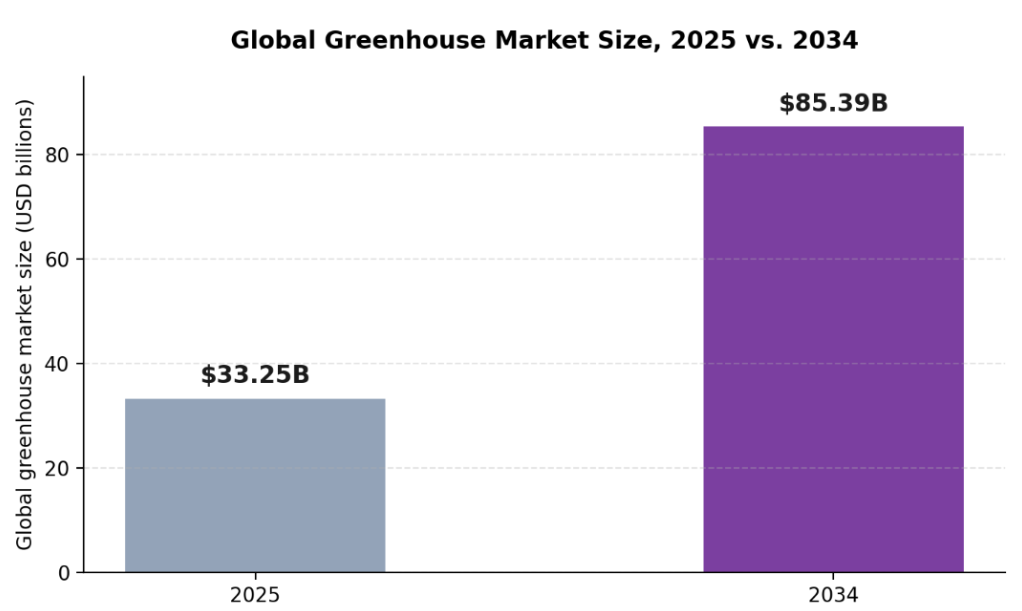
Global greenhouse market size, 2025 versus 2034, according to Fortune Business Insights.
What role does disease resistance play in innovative tomato breeding?
A distinctive, flavorful tomato variety still fails commercially if it can’t survive a real disease outbreak in a working greenhouse or field. Tomato Brown Rugose Fruit Virus (ToBRFV) has become one of the more serious threats facing global tomato production, and breeding programs increasingly test new specialty varieties in deliberately high-pressure virus environments specifically to confirm ToBRFV resistance holds up under genuine disease pressure, not only in more forgiving controlled trials. Building that resistance in from the start, alongside the flavor, color, and shape traits that define a specialty variety, is what actually makes these varieties viable for commercial growers to plant at scale, rather than remaining a novelty confined to small trial plots.
What makes a tomato variety genuinely “innovative” rather than simply different?
| Trait category | What genuine innovation looks like |
|---|---|
| Flavor | A distinctive, reliably reproducible taste profile, not just a marginal variation on existing varieties. |
| Shape and color | Visually distinctive traits bred deliberately as product features, supporting retail differentiation. |
| Disease resistance | Verified resilience to threats like ToBRFV, confirmed under genuine high-pressure disease conditions. |
| Production compatibility | A trait profile suited to real greenhouse or field production, not only ideal laboratory conditions. |
What should growers and retailers weigh before adding a specialty tomato variety?
- Does the variety solve a genuine taste or experience gap, rather than just adding another shape to an already crowded shelf?
- Has ToBRFV resistance been confirmed under real disease pressure, not just in low-risk trial conditions?
- Is the variety suited to the grower’s actual production environment, whether that’s controlled greenhouse cultivation or open-field growing?
- Can the distinctive traits be merchandised clearly at retail, so shoppers understand what makes the variety worth choosing over a standard tomato?
How do bi-colored and uniquely shaped tomatoes fit into a commercial product line?
Bi-colored and unusually shaped tomato varieties occupy a particular role within a specialty collection: they’re often the varieties that draw a shopper’s attention first, even when a more conventional-looking specialty tomato might account for more total volume sold. That visual distinctiveness serves a merchandising function beyond the tomato itself, drawing interest to an entire specialty tomato display or category that a shopper might otherwise pass by on the way to the standard tomato section. For a retailer, a small assortment of visually striking varieties alongside the higher-volume, more familiar specialty formats can lift attention and trial across the whole specialty tomato category, not just sales of the unusual varieties themselves.
What comes next for tomato breeders working in the specialty category?
Innovative tomato varieties rarely stay innovative for long without continued investment. The specialty tomato category continues to evolve past the initial work of proving that flavor-first breeding can succeed commercially. Ongoing work in this space increasingly focuses on maintaining consistency of the traits that made a variety successful in the first place, flavor, color, and shape, across different growing regions and seasons, since a variety that performs brilliantly in one greenhouse environment but inconsistently in another undermines the reliability that got it onto retail shelves to begin with. Layering in continued disease resistance work, particularly as new virus and pest pressures emerge, remains an ongoing priority alongside the flavor and appearance traits that define the category’s appeal in the first place.
Frequently Asked Questions
Why do tomato breeders keep developing new varieties if the shelf is already full?
The gap breeders kept hearing about wasn’t a lack of variety count but a lack of consistent, genuinely improved taste. Innovative breeding programs focus specifically on flavor as a primary trait, alongside distinctive shape and color, rather than simply adding more general-purpose tomatoes to an already crowded category.
Do specialty tomatoes need to be grown in a greenhouse?
Not exclusively, but controlled greenhouse environments help preserve the specific flavor, color, and shape traits these varieties are bred for, which is part of why greenhouse production capacity has expanded alongside demand for specialty produce.
What is ToBRFV, and why does it matter for new tomato varieties?
Tomato Brown Rugose Fruit Virus is an aggressive, fast-spreading virus that poses a serious threat to commercial tomato production. New specialty varieties are increasingly bred and tested for reliable ToBRFV resistance from the start, since a variety without that resistance carries significant crop-loss risk regardless of how good its flavor or appearance is.
What separates an innovative tomato variety from a niche novelty item?
An innovative variety combines a genuine consumer benefit, like distinctive flavor, with production traits, like disease resistance and compatibility with real growing conditions, that let it actually scale commercially, rather than remaining limited to small specialty trial plantings.
|
Key Takeaways
|
Why did pepper breeding pursue a seedless trait in the first place?
Pepper breeding has always followed consumer demand rather than leading it. The push toward seedless peppers grew out of a fairly simple observation: with tomatoes already crowded by dozens of segments on retail shelves, industry conversations kept circling back to peppers as the next real opportunity in fresh vegetables, provided a seedless trait could be made completely reliable. Not lower in seed count, not mostly seedless, but 100% seed-free fruit that a retailer or consumer could depend on every time. That bar turned out to be a multi-decade breeding challenge, moving from an initial industry inquiry roughly two decades ago through sustained varietal breeding work before seed-based seedless varieties became commercially viable.
What is a Kapia pepper, and what makes the mini-Kapia distinct?
The Kapia pepper is traditionally known as an elongated, sweet pepper variety, and the mini-Kapia segment specifically refers to snack-sized peppers with a fruit length between 8 and 15 centimeters. BreedX’s own Mini Kapia pepper page describes the variety as snack-sized and elongated, with exceptional crunch and sweetness, and notes that different varieties within the segment are bred for different growing conditions, some optimized for spring and summer crops, others bred specifically to perform well in winter or cooler climates. That climate-specific breeding matters practically: a variety that thrives in a summer greenhouse cycle won’t necessarily perform the same way through a cooler winter growing season, so having distinct varieties tuned to each condition keeps yield and quality consistent year-round.
How does mini-Kapia compare to the other core seedless pepper segment?
| Segment | Typical fruit length | Best suited for |
|---|---|---|
| 1-Bite | Up to 6 cm | Single-bite snacking, minimal preparation needed |
| Mini-Kapia | 8 to 15 cm | Snacking, stuffing, and light cooking, with more substantial bite size |
Both segments share the core seedless trait, but the difference in fruit length changes how each is actually used and marketed. The shorter 1-Bite format leans entirely into grab-and-go snacking, while the longer mini-Kapia format holds up better for stuffing or being sliced into a dish, giving retailers and consumers a genuine choice rather than a single one-size-fits-all seedless pepper.
Where can you find pictures of pepper varieties before deciding what to grow?
Choosing between pepper segments is considerably easier with a clear visual reference, since fruit length, color, and shape differences are hard to judge from a written description alone. BreedX’s own variety gallery organizes pictures of pepper varieties by segment, including 1-Bite, 2-Bite, Mini Kapia, Midi-Blocky, and Long Conical types, alongside a parallel gallery of tomato varieties. Reviewing pictures across the full range of pepper segments side by side is a practical first step for growers and retailers trying to decide which shape, size, and color best fits a specific market or use case, before committing to seed for a full growing season.
How fast is demand for pepper seed varieties actually growing?
The broader market for pepper seeds gives a sense of how much breeding investment this category continues to attract. Value Market Research’s pepper seeds market analysis values the global market at $3.39 billion in 2025, projected to reach $6.07 billion by 2034, a compound annual growth rate of 6.67%, attributing that growth to rising consumer and culinary demand for diverse, flavorful pepper varieties, including bell peppers, chili peppers, and increasingly, specialty types bred for specific eating experiences rather than general-purpose cooking use.
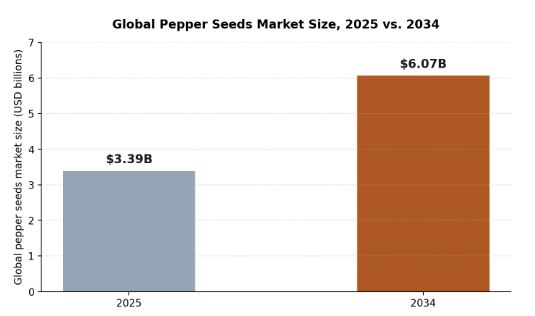
Global pepper seeds market size, 2025 versus 2034, according to Value Market Research.
What does natural fruit setting without fertilization actually mean for growers?
Seedless sweet pepper varieties bred for natural fruit setting produce fruit without requiring fertilization or pollination assistance, a trait known as parthenocarpy. For greenhouse growers specifically, this matters operationally: fruit set becomes more consistent and less dependent on pollinator activity or manual pollination labor, which can otherwise introduce variability into yield planning. Combined with the seedless trait itself, this makes these varieties particularly well suited to controlled greenhouse environments, where consistency and predictability of output are often as commercially important as the eating quality of the fruit itself.
What should a grower or retailer weigh when choosing a pepper segment?
- Target use case: single-bite snacking favors 1-Bite, while stuffing or light cooking favors the longer mini-Kapia format.
- Growing season and climate: some varieties within a segment are specifically bred for spring and summer performance, others for winter or cooler conditions.
- Color range needed: seedless pepper lines are typically available across red, orange, and yellow, giving retailers a way to merchandise variety within the same segment.
- Greenhouse versus open-field production: varieties bred for natural fruit setting are particularly well suited to controlled greenhouse conditions.
How does climate-specific breeding actually change what a grower can plant?
A single seedless pepper variety rarely performs equally well across an entire year-round production calendar, which is exactly why breeding programs develop separate variants tuned for different seasonal conditions rather than pushing one universal variety into every planting window. A variety optimized for long summer daylight and warmer temperatures may set fruit inconsistently when planted into a cooler winter cycle, while a winter-adapted variety may not deliver its full yield potential during peak summer conditions. For growers running multiple planting cycles through the year, having climate-specific options within the same snack segment means yield and fruit quality can stay consistent across the calendar, rather than accepting a seasonal dip every time conditions shift outside a single variety’s ideal range.
How do retailers actually use pepper variety pictures in practice?
A visual gallery organized by segment serves a more concrete purpose than simple product marketing. Retail buyers deciding which pepper formats to carry, and in what colors, benefit from seeing the actual size and shape differences between segments side by side, since written specifications alone can undersell how different an 8-centimeter mini-Kapia looks on shelf compared to a shorter 1-Bite format. Growers evaluating which variety to plant for an upcoming season use the same reference to confirm fruit characteristics match what a specific buyer or market segment is expecting, reducing the chance of a mismatch between what’s grown and what a retail partner actually wants to stock.
Frequently Asked Questions
Is a Kapia pepper the same as a mini-Kapia pepper?
The traditional Kapia pepper is a long-established elongated sweet pepper type. The mini-Kapia specifically refers to a snack-sized breeding segment within the broader Kapia shape category, defined by a fruit length between 8 and 15 centimeters and bred to be seedless.
How long did it take to develop a reliably seedless pepper?
Roughly two decades from initial industry inquiries to commercially reliable seed-based seedless varieties, since the trait needed to be 100% seed-free every time to be genuinely useful to retailers and consumers.
Why does fruit length matter so much between pepper segments?
Fruit length directly shapes how a pepper gets used and marketed. Shorter formats like 1-Bite suit pure grab-and-go snacking, while longer formats like mini-Kapia hold up better for stuffing or being sliced into cooked dishes.
Where can I compare pictures of different pepper varieties side by side?
A dedicated variety gallery organized by segment, showing 1-Bite, 2-Bite, Mini Kapia, Midi-Blocky, and Long Conical types together, gives growers and retailers a practical visual reference before committing to a specific variety for a growing season.
Health And Beauty
Radio Frequency Skin Tightening: A Science-Based Guide to Firmer, Younger-Looking Skin

Skin laxity is one of the most common concerns among adults over 30, and for good reason. As collagen and elastin production naturally decline with age, the skin gradually loses the structural support that keeps it firm and smooth. The result is sagging, fine lines, and a loss of the contoured definition that defines a youthful appearance.
Among the many treatment options available today, radio frequency skin tightening stands out as one of the most clinically supported, non-invasive approaches. In this article, we break down how RF technology works, what it targets, and why it has become a leading choice in professional skin care for those seeking skin firming treatment without surgery.
What Is Radio Frequency Technology?
Radio frequency (RF) energy is a form of electromagnetic radiation that generates controlled heat in the deeper layers of the skin. When applied correctly, this thermal energy stimulates two critical biological processes:
- Immediate collagen fiber contraction, which produces a visible tightening effect from the first session
- Long-term neocollagenesis – the production of new collagen – which continues for weeks and months after treatment
Unlike lasers or light-based treatments, RF energy works independently of skin pigment, making it suitable for all skin tones. It targets the dermis and subdermis without affecting the surface of the skin, allowing for effective treatment with minimal downtime.
The Problem RF Addresses: Why Skin Loses Its Firmness
Collagen is the protein that gives skin its structure and resilience. From our mid-20s onward, the body produces approximately 1% less collagen per year. Compounded by factors such as sun exposure, smoking, stress, and poor nutrition, this decline accelerates – leading to the characteristic signs of aging skin:
- Fine lines and wrinkles forming around the eyes, mouth, and forehead
- Jowl formation and loss of jawline definition
- Loose, crepe-like texture on the neck and décolletage
- Reduced facial volume and contour
RF technology addresses these concerns at their root by reactivating the skin’s own collagen regeneration processes.
Who Is RF Skin Tightening For?
RF skin tightening is well-suited to a broad range of individuals. It is particularly effective for:
- Adults in their 30s to 60s experiencing early to moderate skin laxity
- Those seeking non-surgical alternatives to facelifts or neck lifts
- Clients who have undergone weight loss and wish to address loose skin
- Anyone looking to maintain results from a previous aesthetic procedure
RF is generally not recommended during pregnancy or for individuals with certain implanted medical devices. A consultation with a qualified skin professional is always advisable before beginning treatment.
What to Expect During an RF Facial
A professional RF session typically lasts between 30 and 60 minutes, depending on the treatment area. The procedure involves:
- Cleansing and preparation of the skin
- Application of a conductive gel to enhance RF energy delivery
- Systematic movement of the handpiece across treatment zones
- A warm, deeply penetrating sensation throughout
Most clients describe the experience as comfortable and relaxing. Post-treatment, the skin may appear slightly flushed for a short time, but there is typically no significant downtime.
How Many Sessions Are Required?
Results vary depending on the individual’s baseline skin condition and treatment goals. As a general guideline:
- A visible lift and improvement in texture is often noticeable after just one to three sessions
- A full course of six to eight sessions is recommended for optimal, long-lasting results
- Maintenance sessions every three to six months help preserve the collagen matrix over time
The gradual nature of RF results – mirroring the body’s natural regenerative timeline – means that skin continues to improve for several weeks after the final treatment in a series.
RF vs. Other Skin Tightening Approaches
There are many approaches to addressing skin laxity, ranging from topical firming creams to surgical procedures. RF occupies a valuable middle ground: it delivers clinically meaningful results without the risks, costs, or recovery time associated with surgery, and it significantly outperforms topical products in terms of depth and efficacy.
Its track record in clinical research is well documented. A review published in the Journal of Clinical and Aesthetic Dermatology highlighted RF’s consistent performance in improving skin laxity across diverse patient populations, with high satisfaction rates and minimal adverse effects.
Integrating RF into a Comprehensive Skin Care Plan
For best results, RF skin tightening works most powerfully as part of a broader skin health strategy. Combining regular RF sessions with professional facials targeting hydration, resurfacing, and antioxidant infusion creates a multi-dimensional approach that addresses the full spectrum of skin aging concerns.
Incorporating consistent sun protection and a collagen-supportive diet – rich in vitamin C, amino acids, and antioxidants – will also amplify and extend treatment outcomes.
The Future of RF Technology
The RF space continues to evolve rapidly, with newer devices offering increasingly precise energy delivery, multi-polar configurations for more even heating, and combination with other technologies such as ultrasound and electrostimulation. These advances are expanding the range of treatable concerns and improving treatment comfort and outcomes.
For a broader overview of how non-invasive aesthetic technologies are reshaping the approach to skin aging, Allure magazine’s coverage of clinical skin treatments provides useful context.
External Reference: Allure – The Rise of Non-Invasive Skin Treatments
Tomato Breeders and the Push Toward Innovative Specialty Varieties
Cloud Based Live Video Production and the AI Live Production Unit
Book Digitization, Copy Stands, and Digitizing the Autochrome Process

-

 Business Solutions2 years ago
Live Video Broadcasting with Bonded Transmission Technology
-

 Business Solutions1 year ago
The Future of Healthcare SMS and RCS Messaging
-

 Business Solutions2 years ago
2-Way Texting Solutions from Company Message Services
-

 Business Solutions2 years ago
Communication with Analog to Fiber Converters & RF Link Budgets
-

 DSRC Communication2 years ago
The Crossroads of Connectivity: DSRC vs. C-V2X Technologies in Automotive Communication
-

 Business Solutions2 years ago
Wholesale SMS Platforms with OTP Services
-

 Business Solutions2 years ago
Choosing the Right B2B Digital Marketing Agency: A Guide
-

 3D Technology1 year ago
How Multispectral Cameras Advance Book Scanning