


Industrial Solutions
7 Signs Your IT Hardware Warehousing and RMA Partner Isn’t Built for Compliance

IT equipment warehousing and distribution means storing server, telecom, and data center hardware in strategically located facilities and distributing it as customers need it, instead of shipping every unit individually from origin. It sounds like a straightforward storage function until a shipment gets held at customs because the warehouse partner had no certification knowledge, or a next business day replacement misses its window because the spare part was never pre cleared. The seven signs below separate a partner actually built for regulated hardware from a generic storage vendor.
1. No Bonded Storage Capability
Bonded storage lets imported goods sit in a warehouse without paying duties or taxes until they are actually sold, distributed, or re-exported. For hardware held on a shelf awaiting deployment, that means capital is not tied up in duty payments on units that have not moved yet. A partner without bonded storage forces duty payment up front regardless of how long the equipment sits in inventory.
2. No In House IOR or EOR Capability
A compliance ready warehouse pairs physical storage with customs capability under the same relationship, since the same provider is usually already handling clearance. When warehousing and customs sit with two separate vendors, every shipment needs coordination between them, and that gap is where delays and miscommunication show up.
3. No Certification Knowledge for Regulated Hardware
Importing technology, IT hardware, and security equipment differs from importing ordinary commodity goods. Each country applies its own rules for electrical, radio frequency, encryption, and other technical standards, and a generic 3PL rarely has that knowledge built in. A partner that cannot speak to product certification requirements is guessing at exactly the point where guessing is most expensive.
4. A Single Warehouse Instead of Regional Coverage
Serving multiple countries from one distant facility means every shipment, even a small urgent order, crosses a border and a customs process. Regional coverage puts inventory closer to where it is actually needed, which matters most for time sensitive replacement parts.
- A single regional hub can often serve several neighboring markets without a dedicated facility in each one
- Not every country requires its own warehouse, but every shipment from a distant single site does require its own clearance
5. RMA Is Handled by a Separate Vendor
Warehousing is not just about the initial deployment. Regional inventory positioned under an existing import relationship is what makes fast RMA turnaround possible, since a replacement unit can ship from nearby stock instead of waiting on a fresh customs clearance from origin. When warehousing and RMA sit with two different vendors, that speed advantage disappears.
6. No Pre Cleared Spare Parts Inventory
A 24 hour or next business day support commitment sounds simple until it has to survive an international border. Meeting it requires pre-cleared spare parts inventory staged in the region, an active import relationship so replacements do not wait on paperwork, and a courier network that does not add its own delay on top of an already tight window. Without pre cleared inventory, the tightest SLA tiers are not realistic no matter what a vendor promises on paper.
7. Outbound and Inbound Flows Run Through Separate Facilities
Returns can be received, inspected, and redistributed from the same facility handling outbound distribution, or they can bounce between two disconnected operations. One provider covering both directions is generally more efficient than coordinating a warehousing vendor and a separate reverse logistics vendor for the same regional footprint.
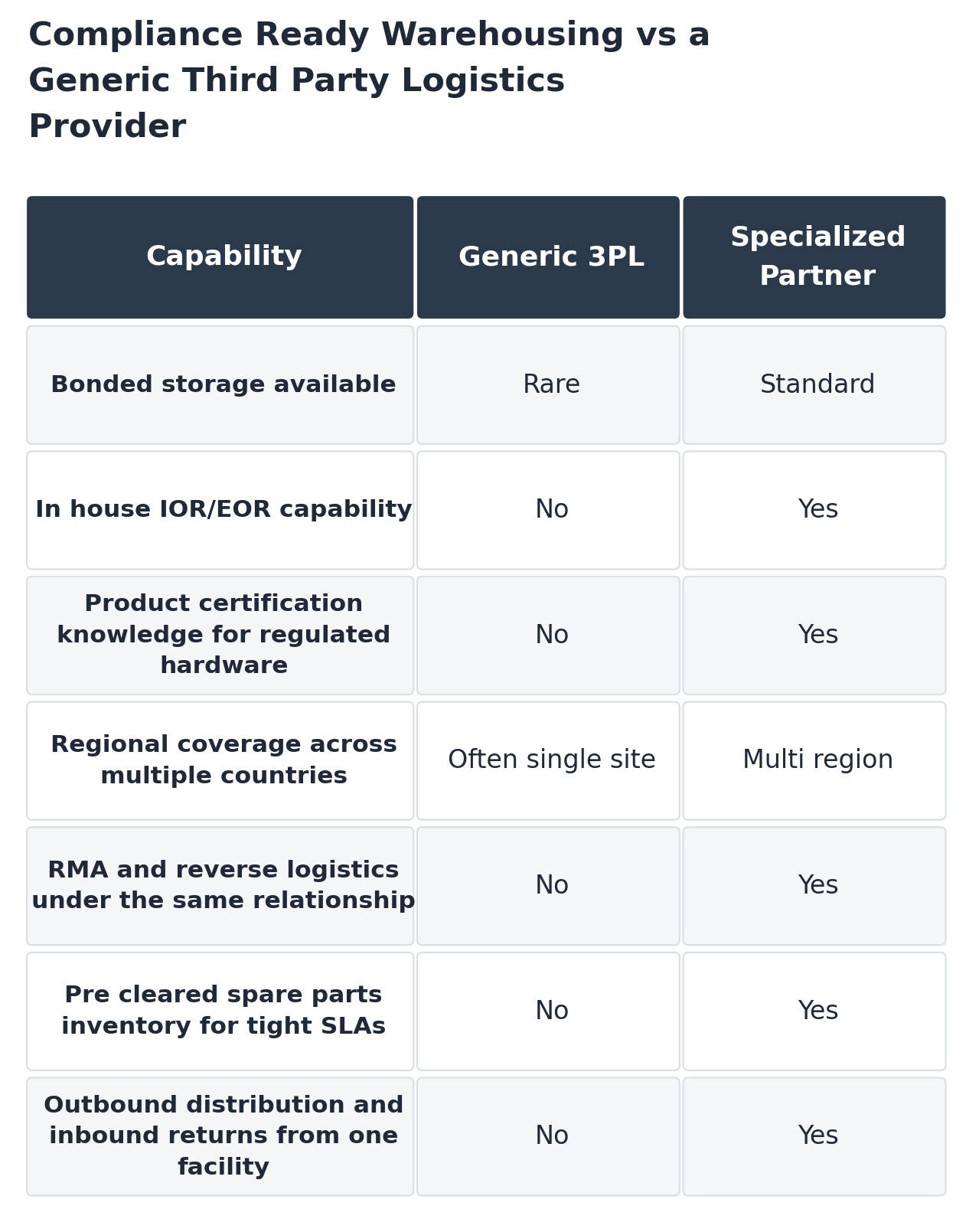
Compliance Ready Warehousing vs a Generic 3PL
Compliance ready warehousing versus a generic third party logistics provider for IT and data center hardware
Where This Shows Up Most
Regional distribution matters most where customs and telecom certification regimes are heaviest. Warehousing built around IT equipment warehousing and distribution needs, rather than generic storage, tends to make the biggest difference in markets with layered certification requirements, and the same logic extends directly into RMA and post sales logistics, since a return shipment carries the same compliance questions as the original import in reverse.
Regional hubs also matter for broader IT hardware logistics planning, since the choice of where to stage inventory affects both initial deployment speed and how quickly a failed unit can be replaced later.
A useful outside reference here is the concept of a bonded warehouse, a facility authorized to store imported dutiable goods without immediate payment of duty, which are then either withdrawn for domestic use with duty paid, or re-exported without ever triggering that duty at all.
The Cost Side of Getting This Wrong
None of these seven signs show up as a line item on a warehousing quote, which is exactly why they get missed during vendor selection. A generic 3PL often looks cheaper on paper because bonded storage, in house certification knowledge, and integrated RMA all cost money to maintain. That gap tends to show up later instead, as duty paid on inventory that never should have needed it, as a shipment held at customs because no one on the warehousing side knew the certification requirement existed, or as a support ticket that misses its SLA because the replacement part had to clear customs from origin instead of shipping from regional stock already on hand.
Frequently Asked Questions
Do I need a warehouse in every country I sell into?
Not necessarily. Regional hubs can often serve several neighboring countries, which reduces the need for a dedicated facility in every single market.
How does warehousing actually affect RMA response times?
Pre cleared regional inventory is what makes tight SLA windows like 24 hour or next business day support realistic, since a replacement does not need fresh customs clearance from origin.


Walk down a produce aisle today and you’ll likely find small, brightly colored peppers with no seed cavity to speak of, marketed as an easy snacking option. These seedless mini pepper varieties have become one of the fastest-growing formats in the sweet pepper category, and the trend lines behind them go back further than most shoppers realize.
Why is snack-size pepper demand rising?
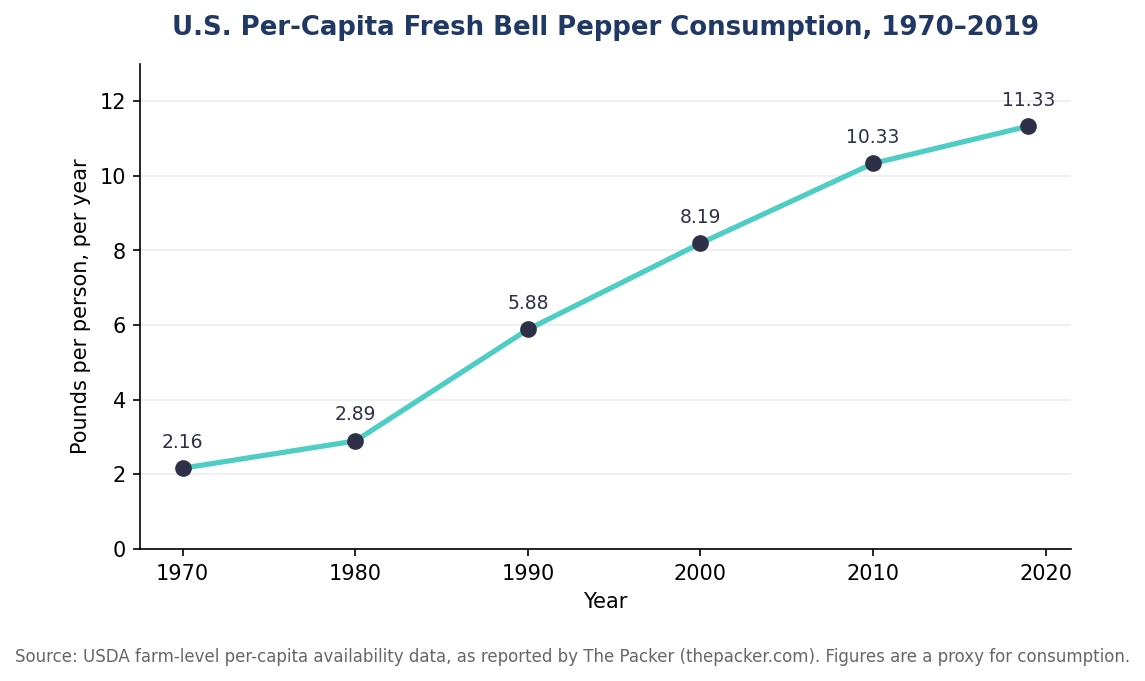
Fresh bell peppers have seen one of the steadiest long-term consumption increases of any vegetable in the US. USDA farm-level availability data shows per-capita consumption climbing more or less continuously for five decades, and that growth accelerated as smaller, snack-oriented formats entered the market.
U.S. per-capita fresh bell pepper consumption has grown roughly fivefold since 1970, based on USDA availability data reported by The Packer.
What makes a mini pepper “seedless”?
Unlike a bell pepper that’s simply small for its type, a seedless mini pepper is bred to set fruit without developing a seed cavity at all. This comes from a breeding trait called parthenocarpy combined with male sterility, which together let the plant produce full, symmetrical fruit without fertilization. The practical result for a shopper is a pepper you can eat whole, straight from the bag, without the chore of halving, deseeding, and rinsing.
Are seedless mini peppers seasonal?
Because seedless varieties, including small formats like the mini-Kapia pepper format, are typically grown in greenhouse and controlled environments as well as in the field, supply tends to be more consistent year-round than for open-field-only crops. That consistency is part of what has made the category attractive to retailers looking for a reliable snacking SKU rather than a short-season specialty item.
Nutritional profile of snacking peppers
Sweet peppers, mini and full-size alike, are a genuinely strong source of vitamin C, and the amount varies meaningfully by color as the fruit ripens. USDA nutrition data for sweet peppers shows red peppers carrying substantially more vitamin C than green ones of the same type, since vitamin C content rises as the fruit matures from green to red.
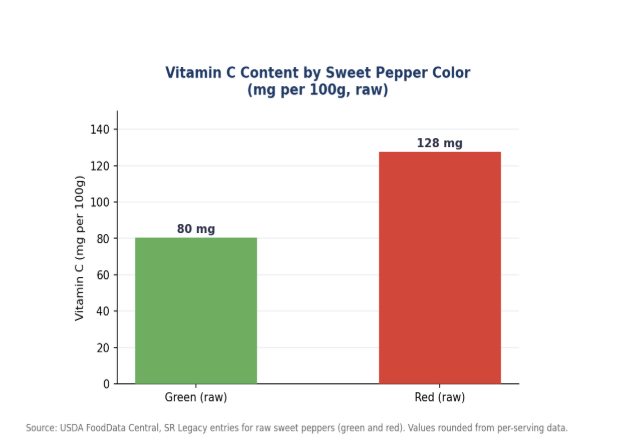
Red sweet peppers contain roughly 50% more vitamin C than green ones of the same type, per USDA FoodData Central entries.
What is driving retailers to expand this category?
Retail category managers have historically treated bell peppers as a cooking ingredient rather than a standalone snack. The rise of seedless mini formats has shifted that positioning, since a small, no-prep pepper competes more directly with baby carrots, grape tomatoes, and other grab-and-go produce than with a full-size bell pepper destined for a stir-fry. That repositioning matters commercially because snacking-category produce items tend to carry different margins and shelf placement than cooking-ingredient vegetables, giving retailers an incentive to expand shelf space for the format as consumer awareness grows.
How are seedless mini peppers typically packaged?
Because the appeal of the category rests heavily on convenience, packaging tends to emphasize grab-and-go formats: resealable bags, multi-color mixed packs, and single-serving portions aimed at lunchboxes and snack trays. This is a notable departure from how bell peppers have traditionally been merchandised, typically loose or in simple mesh bags sold by weight. The format shift reflects a broader pattern in produce retail, where smaller, pre-portioned packaging has expanded across categories like snacking tomatoes and baby cucumbers as well.
What should shoppers know before buying seedless mini peppers?
Color is a reasonably reliable guide to ripeness and flavor profile in sweet peppers generally: green peppers are harvested earlier in the ripening cycle and carry a slightly more vegetal, less sweet flavor, while red, orange, and yellow peppers are allowed to fully ripen and tend to taste sweeter. This holds true across both seeded and seedless formats. Shoppers looking for the sweetest possible snacking experience typically do better selecting fully colored red, orange, or yellow mini peppers rather than green ones, regardless of which specific variety or brand is on the shelf.
How does this format fit into a broader healthy-snacking shift?
The growth of seedless mini peppers has tracked alongside a broader retail shift toward convenient, whole-food snacking options, as shoppers look for alternatives to processed snack foods that still fit into an on-the-go lifestyle. Sweet peppers compete in that space against other low-prep produce like snap peas, baby carrots, and grape tomatoes, all of which share the same basic value proposition: little to no preparation required, and a favorable nutrition profile relative to packaged snack alternatives. Because sweet peppers carry meaningfully more vitamin C per serving than most of those competing snack vegetables, the category has a genuine nutritional argument to make alongside its convenience story.
For school lunch programs and workplace wellness initiatives specifically, the appeal of a seedless format is amplified by practical logistics: no knives or cutting boards are needed to portion a mini pepper for a lunchbox, which matters in settings where food preparation time and equipment are both constrained. That practical fit has helped seedless mini peppers gain traction in institutional foodservice channels alongside traditional grocery retail.
Frequently Asked Questions
Do seedless mini peppers need to be refrigerated?
Yes, like most fresh sweet peppers, they keep best refrigerated and are typically sold and stored in the produce cooler section.
Are seedless mini peppers more expensive than regular bell peppers?
Pricing varies by retailer and season, but snack-size seedless formats are often positioned as a premium, convenience-oriented product relative to standard bell peppers.
Can seedless mini peppers be cooked, or are they only for snacking?
They can be used in cooking the same way as any sweet pepper, though their small size and lack of seed cavity make raw snacking and stuffing especially convenient uses.
Industrial Solutions
Industrial IoT Gateways for Remote Asset Monitoring: What Utilities and Infrastructure Operators Need to Know
Deploying industrial IoT gateways for remote asset monitoring allows critical infrastructure firms to manage distributed field assets that stretch across thousands of kilometers safely. Whether the assets are power transmission towers, water pump stations, or unattended substations, operators face a shared problem. They need real-time visibility into equipment that is physically far away and exposed to harsh weather elements. Furthermore, these networks must operate over unreliable or highly constrained communication links.
These specialized gateways sit at the field edge to aggregate data from remote sensors and control equipment. Consequently, they process data locally where needed and relay it securely to centralized management platforms. Selecting the right gateway platform remains a critical decision. The wrong choice creates connectivity gaps, cybersecurity exposure, and an intense maintenance burden that erodes structural efficiency gains.
Operational Challenges Mitigated by Edge Infrastructure
Transitioning from legacy manual diagnostics to automated field nodes resolves multiple systemic bottlenecks for modern utility teams. For example, a failure to monitor transformer health results in massive network outages.
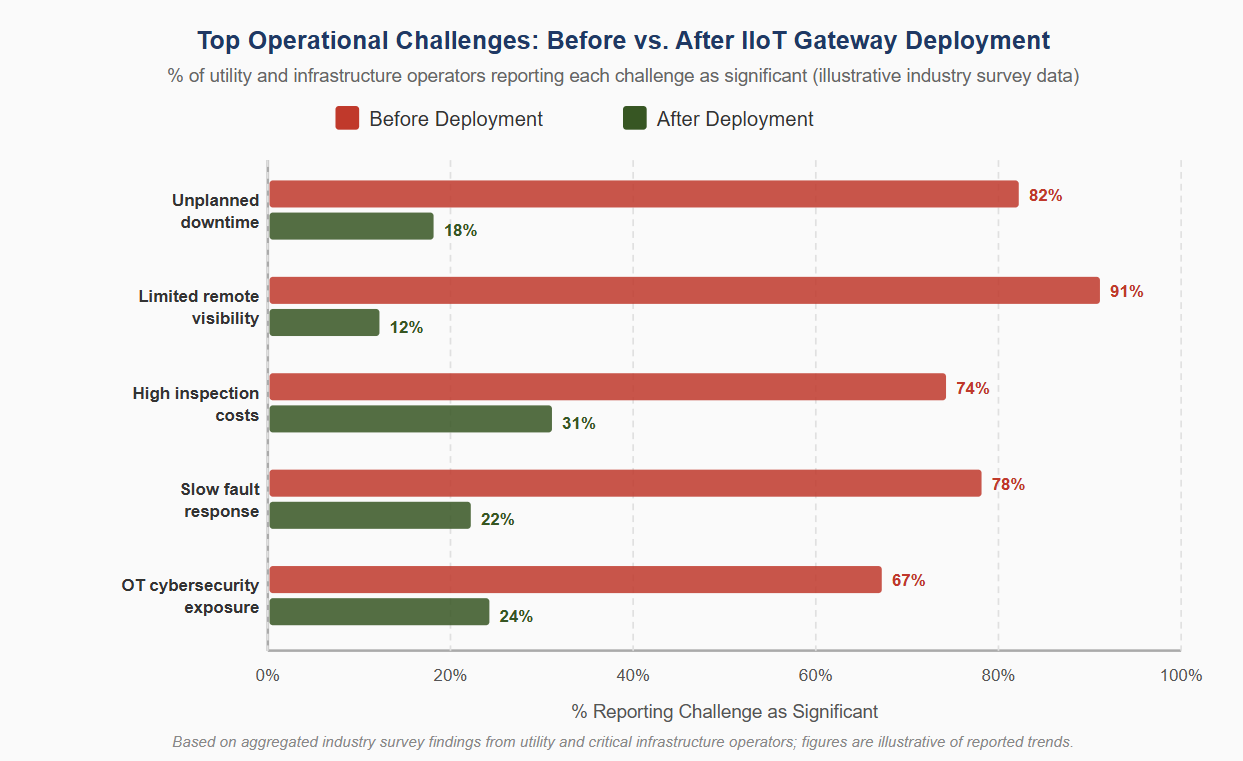
The chart below shows the top operational challenges reported by utility and infrastructure operators before and after deployment campaigns:
| Requirement | Power Utilities | Water & Wastewater | Oil & Gas | Transportation |
| Legacy Protocols | IEC 61850, DNP3 | Modbus, DNP3 | Modbus, PROFIBUS |
IEC 61375, Modbus |
| Operating Temp | -40°C to +70°C | -20°C to +60°C | -40°C to +70°C |
-40°C to +70°C |
| Comms Redundancy | Fiber + LTE failover | LTE primary / backup | Satellite + LTE |
LTE + Wi-Fi backup |
| Cybersecurity Standards | IEC 62443, NERC CIP | NIST CSF | IEC 62443 |
NIS2, IEC 62443 |
| Certifications | IEC 61850-3, IEEE 1613 | IP67, ATEX (some) | ATEX, IECEx |
EN 50121-4 |
Core Tasks of Hardware at the Network Edge
It is worth being precise about what distinguishes an industrial gateway from a generic office router or a basic consumer hub. Field sensor networks use old serial protocols like Modbus RTU or DNP3. Therefore, the gateway handles protocol conversion by translating these legacy formats into modern IP-based data streams.
In addition, embedding edge compute capabilities within the hardware layer allows for rapid data compression and local threshold detection. This localized processing keeps bandwidth consumption minimal. Furthermore, field components feature extensive environmental hardening. This enables them to survive wide temperature fluctuations between -40°C and +70°C without mechanical failure.
Managing Connectivity and Private Cellular Channels
Field site connectivity architectures vary based on geography. While some central facilities utilize fiber lines, distant installations rely completely on public cellular or satellite communication links. As a result, gateways require automated link switchover capabilities and dual SIM slot structures to maintain data integrity.
Furthermore, utilities are increasingly deploying private LTE and private 5G campus networks to gain dedicated wireless coverage. Modern hardware choices must support these private bands alongside standard WAN interfaces to eliminate coverage gaps. To optimize asset health over long distances, operators frequently combine these channels with specialized power line monitoring solutions to protect linear infrastructure lines.
Hardening Operational Technology Cybersecurity Postures
Operational technology (OT) environments were historically air-gapped from corporate networks. However, that physical isolation no longer exists in modern utility architecture. Every connected edge device introduces a potential attack surface that malicious actors can target.
Consequently, procurement teams must enforce strict compliance with international security frameworks. For example, the IEC 62443 standard dictates device authentication, role-based access control, and encrypted data transmission paths. Operators must verify these compliance logs independently to protect decentralized networks against unauthorized systemic access.
Shortlist Criteria for System Fleet Evaluation
When choosing an edge gateway platform, engineering directors should look for native protocol breadth rather than relying on generic vendor claims. In addition, require official test certificates for sector-specific hazards like ATEX zones or railway vibrations. Fleet management is also critical. Because managing hundreds of individual locations manually is impossible, platforms must offer zero-touch provisioning and secure over-the-air (OTA) firmware updates. Finally, confirm that the vendor guarantees long-term hardware availability and patch support across a standard fifteen-year asset lifecycle.
Conclusion
Remote diagnostics have transitioned from a premium best-practice to a baseline requirement across critical infrastructure networks. The field gateway provides the foundational intelligence that makes this scaling viable. However, this success is only possible when the hardware matches the strict realities of the deployment zone. Taking shortcuts in the selection phase creates expensive field failures within the first year of deployment. In contrast, selecting a secure, hardened substation automation gateway ensures that grid monitoring remains continuous, resilient, and safe over decades of service.
Review Disclaimer
This independent technical analysis is intended for industrial evaluation and network planning purposes only. Operational metric reductions, protocol conversion speeds, and link failover times vary based on local RF conditions, firmware configurations, and backend management setups. Critical infrastructure operators must independently verify hardware test certificates and run closed-loop pilot tests before executing large-scale edge deployments.
Greenhouse Specialty Tomatoes: Optimizing Brix and Flavor Profiles
The commercial cultivation of vine-ripened produce within controlled environment agriculture (CEA) spaces has shifted from basic volume tracking to strict quality and flavor management. For greenhouse agronomists, major estate developers, and premium grocery suppliers, producing a high-yield fresh tomato harvest requires balancing water inputs, lighting schedules, and specialized plant nutrition. Historically, large-scale tomato production prioritized total fruit weight and transport firmness over consumer taste profiles. This focus often resulted in watery, low-sugar tomatoes that failed to secure premium pricing from modern retail networks or gourmet food distributors.
To capture high-margin retail positions, progressive greenhouse operations are utilizing advanced agronomic selection models to maximize natural sugar concentrations and flavor depth. Shifting focus toward sweetness metrics and balanced acidity levels enables growers to deliver intense, uniform flavor profiles that command premium shelf space. This technical analysis breaks down the chemical factors that drive fruit flavor, evaluates the resource efficiency of advanced greenhouse systems, and demonstrates how specialized seed genetics secure consistent quality in large-scale operations.
The Chemistry of Taste: Managing Brix Concentration
The commercial value of specialty snacking produce is heavily dictated by its rating on the Brix scale, which measures the percentage of dissolved solids—primarily natural sugars—within the fruit’s juice. Standard commodity tomatoes frequently display low Brix scores, resulting in a bland taste profile that alienates premium consumer groups. Achieving a superior flavor profile requires seed varieties that naturally channel nutrients into sugar development without compromising vine vigor or fruit skin strength.
Utilizing dedicated genetic platforms to select tomato breeders and high-brix strains solves these quality variations completely. Advanced agronomic systems manage greenhouse microclimates and root nutrition to support the natural strengths of specialized seed lines. This targeted approach enables growers to produce a snacking tomato that consistently achieves excellent sugar concentrations, ensuring every harvest matches strict retail flavor profiles.
Quantitative Comparison: Sugar Concentrations on the Brix Scale
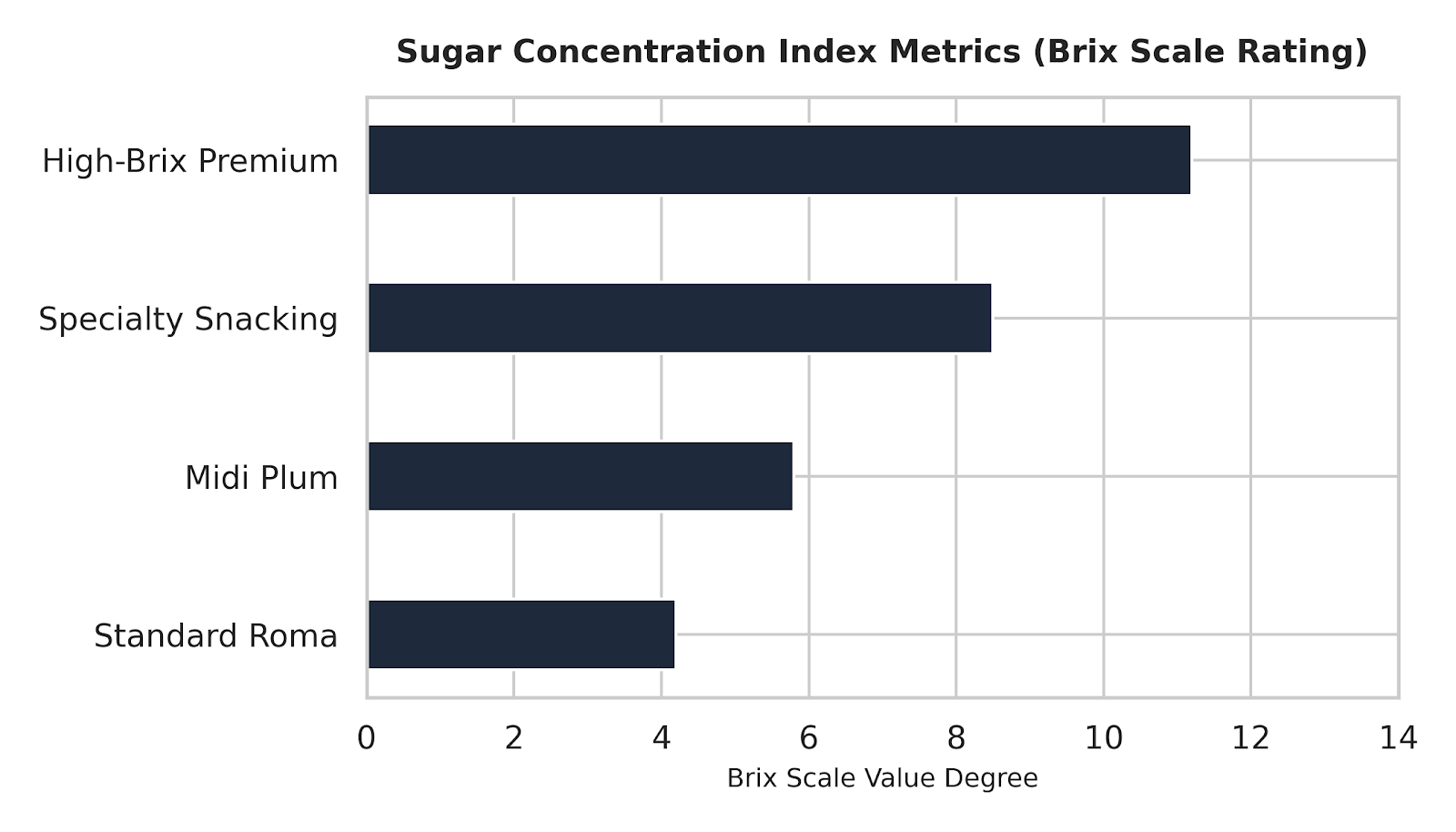
Field data from greenhouse operations confirms that seed genetics are the primary factor dictating final fruit sweetness. While climate controls optimize plant health, specialized crop varieties are essential to reach top-tier sugar concentrations.
The chart below outlines the average sugar concentration scores achieved across different tomato classifications under standardized controlled greenhouse conditions:
📈 Sugar Concentration Index Metrics (Brix Scale Rating)
Securing Visual and Textural Uniformity in Specialty Produce
Maximizing fruit sweetness provides limited value if the harvest lacks structural uniformity. Retail distribution buyers demand absolute consistency in shape, weight, and color across every shipment to match automated grocery displays, such as specialized greenhouse tomato varieties and premium plum tomato varieties.
A thorough review of premium supply networks shows that integrating advanced specialty tomatoes lines and high-yield tomato umami varieties secures long-term market access. These varieties develop thick cell walls that resist cracking during transport while packing intense natural flavor. By aligning greenhouse production with advanced flavor genetics, commercial operators protect their crops from bruising and establish reliable, premium revenue streams throughout the year.
Conclusion
Relying on low-brix commodity crop lines within high-cost controlled environment agriculture spaces limits revenue potential and increases vulnerability to market price swings. Shifting production over to high-brix specialty tomato varieties provides greenhouse operators and grocery suppliers with a reliable way to maximize fruit quality, secure premium market pricing, and build strong consumer brand loyalty. As retail quality audits and distributor selection criteria continue to tighten, deploying advanced flavor-driven crop genetics remains a fundamental strategy for scaling profitable greenhouse infrastructure.
RF Over Fiber (RF Over Glass): Why Radio Frequency Signals Are Moving to Fiber

Bonded Streaming and IP Bonding: How Contribution Encoders Actually Work
Edge Video Intelligence Solutions and Embedded Video Processing, Explained

-

 Business Solutions2 years ago
Live Video Broadcasting with Bonded Transmission Technology
-

 Business Solutions1 year ago
The Future of Healthcare SMS and RCS Messaging
-

 Business Solutions2 years ago
2-Way Texting Solutions from Company Message Services
-

 Business Solutions2 years ago
Communication with Analog to Fiber Converters & RF Link Budgets
-

 DSRC Communication1 year ago
The Crossroads of Connectivity: DSRC vs. C-V2X Technologies in Automotive Communication
-

 Business Solutions2 years ago
Wholesale SMS Platforms with OTP Services
-

 Business Solutions2 years ago
Choosing the Right B2B Digital Marketing Agency: A Guide
-

 3D Technology1 year ago
How Multispectral Cameras Advance Book Scanning