


Medical solutions
Medical Device Cases: What Healthcare Equipment Needs From a Carrying Case

| Key Takeaways
• A medical device case must protect the device, organize its accessories and allow fast access, often without removing the device from the case. • ISO 13485 is the international quality management standard for the design and manufacture of medical devices and can also benefit their suppliers. • CDC guidance groups patient-care items by contact with the patient, and items that touch only intact skin call for low-level disinfection. • EVA thermoforming, injection molding, vacuum forming, sewing and blow molding each suit different medical devices, so the production method should follow the device and its cleaning needs. |
What should a medical device case do?
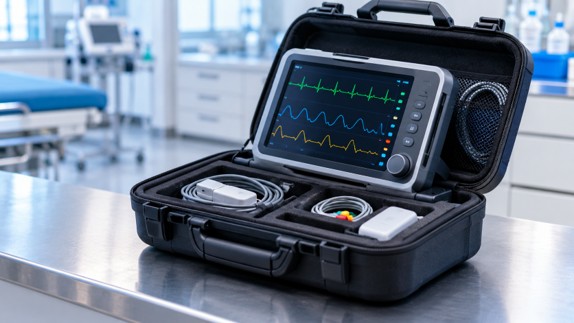
A medical device case should protect the device from impact and contamination, keep every accessory in a fixed place and let a clinician reach and operate the equipment quickly, often without taking it out. Protection and usability have to work together, because a case that slows a responder down defeats its purpose.
The range of equipment is wide: defibrillators and AEDs, portable ultrasound units, diagnostic monitors, EEG systems, surgical headlights and EMS gear all travel in cases. Medical device carrying case design and production therefore varies from lightweight shells for handheld monitors to rigid plastic units for precision systems. Portable imaging adds its own needs, such as probe holders, cable management and a secure screen, which carrying cases for portable ultrasound and diagnostic equipment are built to handle.
Use-in-case designs let a device be operated, charged or ventilated while it stays inside the case, which keeps it protected during the moments when it is most likely to be bumped or set down.
Which standards and rules shape medical device case design?
Case manufacturers that supply medical device companies often work under ISO 13485, the international quality management standard for the design and manufacture of medical devices, and they select materials against chemical restrictions such as REACH and RoHS.
ISO 13485 provides a framework for consistent design, development, production and delivery of medical devices, and it is also intended to benefit suppliers and other external parties that provide product to those organizations. For a case supplier, certification signals documented processes for design control, validation and traceability. Shell-Case, for example, states that it is ISO 13485 certified for the design and manufacturing of medical device carrying cases.
Material compliance is the second layer. Chemical rules such as REACH and RoHS, California’s Prop 65 and biocompatibility requirements for parts that touch skin all influence which polymers, coatings and textiles can be used. Choosing compliant materials at the start of a project avoids having to redesign the case late in a program.
How are medical device cases cleaned and disinfected?
Healthcare facilities follow a tiered scheme: items that enter sterile tissue are sterilized, items that touch mucous membranes or nonintact skin receive at least high-level disinfection, and items that touch only intact skin receive low-level disinfection. This scheme, known as the Spaulding classification, underpins CDC guidance on disinfection and sterilization.
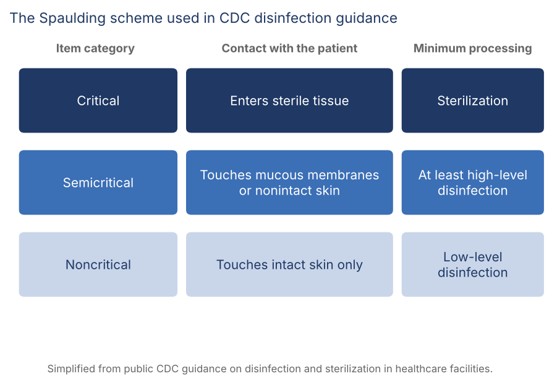
CDC describes noncritical patient-care items such as blood pressure cuffs and computers as candidates for low-level disinfection with registered disinfectants, and notes that most such products carry a 10-minute label claim. Which routine a particular case meets is a decision for each facility’s infection prevention team, but the practical design lesson is consistent: smooth, closed, coated surfaces and few crevices make repeated wiping faster and more reliable.
Cleaning also shapes material choice. Coated EVA shells, injection-molded plastics and blow-molded shells can be wiped down, while exposed textile and open foam are harder to keep clean.
Which materials and production methods suit medical device cases?
No single method fits every device. EVA thermoforming suits lightweight shock-absorbing cases, injection molding delivers rigid and cleanable plastic, vacuum forming produces large hard shells, sewing creates soft daily-carry bags and blow molding gives recyclable cases that are easy to sterilize.
| Production method | Common medical uses | Notable trait |
| EVA thermoforming | AEDs, portable ultrasound, diagnostic and rehabilitation devices, dental loupes | Lightweight and shock absorbing |
| Injection molding | EEG systems, surgical devices, video laryngoscopes, home-use devices | Precise, cleanable rigid plastic |
| Vacuum forming | Surgical headlights, eye-imaging devices, EMS backpacks, ambulance equipment systems | Large, durable hard shells |
| Sewing | Patient bags, portable ultrasound pouches, orthopedic equipment cases | Soft, flexible, suited to daily wear |
| Blow molding | Hospital-grade breast pumps and other durable device gear | Recyclable and easy to sterilize |
Methods can be combined. A Shell-Case AED case, for instance, pairs a thermoformed EVA shell coated with TPU with a magnetic closure that opens in about one second, showing how shell material and closure design together determine how fast a responder can reach the device.
Interiors deserve equal attention. Molded polyurethane foam trays, custom-cut foam, EPP interiors and printed organizing layers hold devices and accessories in fixed positions, which limits movement during transport and shortens the time needed to find a cable or electrode.
Which design details help clinicians in high-pressure moments?
Details that shorten the time to first use matter most: a pocket for every accessory, zippers that open in one motion and a layout that shows the device status at a glance. In emergency equipment, every feature has to work reliably when the user is stressed and the environment is unpredictable.
Cases for equipment that is used on the move add padded interiors, reinforced sections and options such as shoulder straps or carrying handles. Access to screens, buttons and ports without removing the device allows staff to operate it while it stays protected, and a transparent window can display an indicator light or status screen without opening the case.
Weight and ergonomics count as well. A responder who carries a defibrillator case up several flights of stairs, or a clinician who carries ultrasound equipment between rooms, benefits from a lightweight shell and a comfortable grip, which is why material choice and carrying features are specified together.
What should device makers ask a case supplier?
The most useful questions cover quality system, materials, cleaning and validation. Asking them early prevents a case from becoming a late-stage compliance problem.
- Quality system: is the supplier certified to ISO 13485 for the design and manufacture of medical device carrying cases?
- Materials: which polymers, coatings and textiles are used, and what compliance documents exist for REACH, RoHS and biocompatibility?
- Cleaning: which disinfectants have been tested against the finished surfaces, and how many cleaning cycles do they tolerate?
- Validation: was the case drop tested with the real device inside, and are the results documented?
- Supply: can the supplier support the volumes, regions and reorder schedule the program requires?
Answers to these five questions give a device maker a realistic picture of how a case will behave in clinical use, not only how it looks in a prototype.
Frequently Asked Questions
What is a medical device carrying case?
A medical device carrying case is a protective case designed around a specific device, such as an AED, ultrasound unit or monitor, that holds the device and its accessories securely and allows quick access in clinical or field settings.
Do medical device cases need ISO 13485 certification?
ISO 13485 applies to organizations involved in medical device design and production and can also benefit their suppliers, so it is a common checkpoint when device makers choose a case supplier.
How should a medical device case be cleaned?
Cleaning should follow the device manufacturer’s instructions and the facility’s infection prevention policy, which typically calls for low-level disinfection of surfaces that touch only intact skin.
Which production methods are used for medical device cases?
Common methods include EVA thermoforming, injection molding, vacuum forming, sewing, blow molding and advanced bonding, chosen according to the device’s weight, cleaning needs and volume.


Medical solutions
Oxygen Facial Treatments: What They Are, How They Work, and Why OxyGeneo Stands Apart
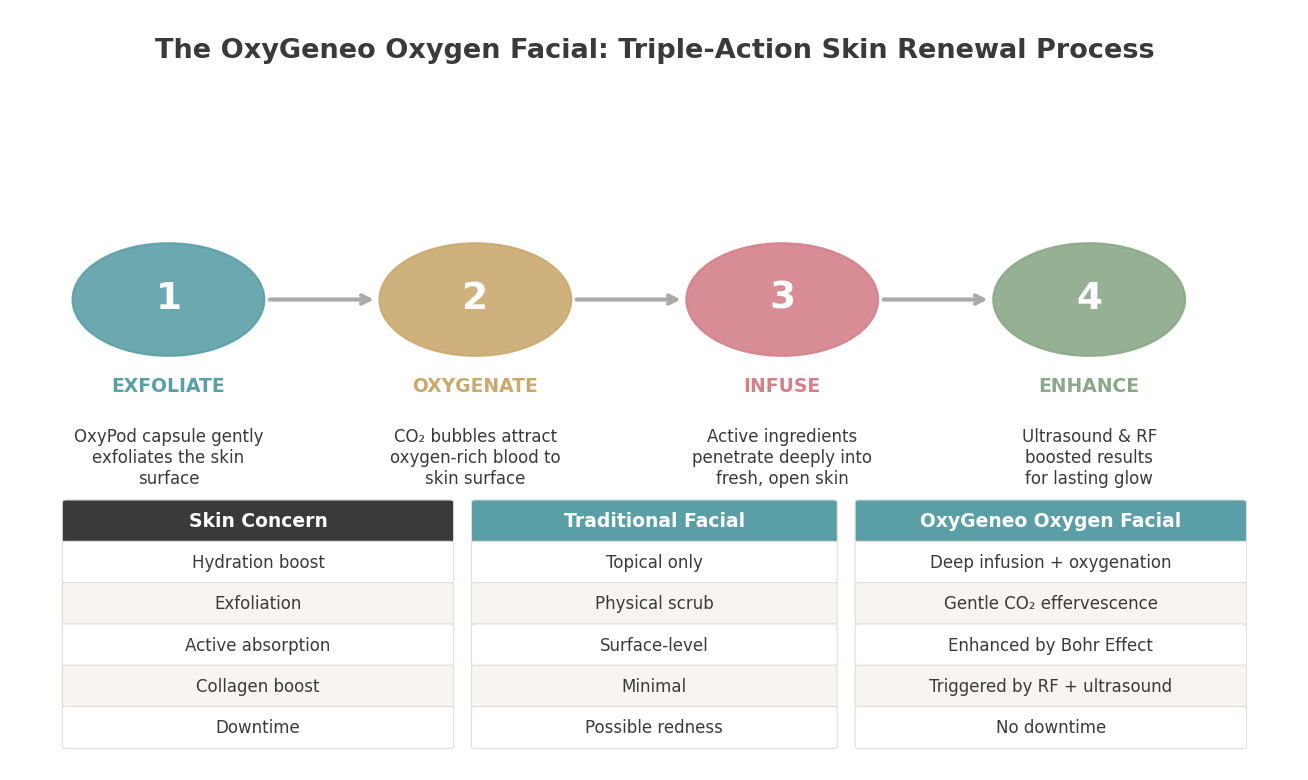
The oxygen facial has captured the imagination of skin enthusiasts and celebrities alike — and for good reason. Oxygen is fundamental to every cellular process in the skin. When oxygen levels in the dermis are optimised, skin cell renewal accelerates, collagen synthesis improves, and the complexion takes on the dewy, luminous quality that no amount of surface-level product application can replicate. But not all oxygen facials are equal, and understanding how different approaches to skin oxygenation compare is essential to choosing the right treatment.
What Is an Oxygen Facial?
An oxygen facial is a professional skin treatment that introduces elevated concentrations of oxygen to the skin — either through topical application, pressurised delivery, or by triggering the body’s own oxygenation response. The goal is to increase cellular oxygen levels in the epidermis and dermis, stimulating renewal, enhancing nutrient absorption, and producing an immediate brightening and plumping effect.
The market contains several distinct approaches to oxygen facial delivery. Pressurised oxygen machines spray oxygen and serums directly onto the skin surface. Hyperbaric oxygen chambers saturate the surrounding air. OxyGeneo, by contrast, takes a fundamentally different and clinically validated approach: rather than applying oxygen externally, it triggers the skin’s own natural oxygenation response from within — a mechanism based on the Bohr Effect.
The Bohr Effect: The Science Behind Internal Skin Oxygenation
The Bohr Effect is a well-established physiological principle: when CO₂ levels in the bloodstream rise, haemoglobin releases more oxygen to surrounding tissues. OxyGeneo harnesses this mechanism by creating a controlled CO₂ environment at the skin’s surface using the effervescent reaction between the OxyPod capsule and its complementary serum. The skin, sensing elevated surface CO₂, responds by sending oxygen-rich blood to the treatment area — increasing dermal oxygen concentration by up to 30% compared to baseline.
This internally-triggered oxygenation is more effective than topical oxygen application because it delivers oxygen through the vascular system — precisely where the skin’s fibroblasts, keratinocytes, and collagen-producing cells need it most.
OxyGeneo vs Pressurised Oxygen Facials: Key Differences
| Feature | Pressurised O₂ Facial | OxyGeneo Technology |
| Oxygen delivery method | External — sprayed onto surface | Internal — Bohr Effect triggers blood oxygenation |
| Skin penetration depth | Epidermis only | Dermal layer via vascular response |
| Exfoliation included | Separate step required | Built-in via OxyPod effervescence |
| Active ingredient absorption | Standard | Enhanced by oxygenation + permeability increase |
| Evidence base | Anecdotal / limited | Clinical studies, Pollogen by Lumenis data |
| Downtime | None | None |
The OxyPod System: Personalised Active Ingredients
What distinguishes the OxyGeneo oxygen facial experience from a standard oxygen treatment is the OxyPod system. Each OxyPod capsule contains a unique combination of active ingredients tailored to a specific skin concern. When combined with the complementary serum during treatment, the OxyPod creates the effervescent CO₂ reaction that triggers oxygenation while simultaneously releasing its active ingredients into freshly oxygenated, highly permeable skin.
- Geneo Illuminate: Kojic acid, Vitamin C, and carrot extract for brightening and pigmentation correction.
- Geneo Hydrate: Blue spirulina, niacinamide, and lactobionic acid for deep hydration and barrier repair.
- Geneo Revive: Almond oil and nourishing lipids for mature, dry skin requiring intensive renewal.
- Geneo Clarify: Charcoal and purifying actives for congested, oily skin.
- Geneo Energize: Cocoa bean, caffeine, and cinnamon oil for dull, fatigued skin needing circulation boost.
Immediate and Cumulative Benefits
One of the reasons oxygen facials are so popular is their ability to deliver visible results after a single session. The OxyGeneo treatment produces immediate improvements in skin luminosity, hydration, and texture that are noticeable within hours. With a course of treatments — typically 4–6 sessions spaced 1–2 weeks apart — cumulative benefits including improved skin tone evenness, reduced fine lines, and lasting hydration enhancement become progressively more apparent.
Who Is the Oxygen Facial Right For?
- Dull, tired complexions: The oxygenation response immediately revitalises sluggish cellular activity and produces a visible glow.
- Pre-event preparation: Oxygen facials are consistently popular as pre-wedding, pre-party treatments because of the immediate brightening and smoothing effect.
- Sensitive skin: The OxyGeneo mechanism is non-aggressive — no harsh abrasives, no microneedling — making it suitable for sensitive and reactive skin types.
- All skin types: The OxyPod customisation system allows the oxygen facial to be tailored to oily, dry, combination, or mature skin.
- Pigmentation and uneven tone: Oxygen-enhanced delivery of brightening actives makes the oxygen facial highly effective for pigmentation concerns when combined with the appropriate OxyPod.
Further Reading
For the full technical explanation of OxyGeneo technology, visit Geneo’s OxyGeneo technology page. For clinical studies supporting Geneo’s treatment outcomes, the Geneo clinical research page provides peer-reviewed evidence for the platform’s efficacy. For independent skincare technology analysis, AI Tech Publication on aesthetic innovations covers emerging treatment technologies.
Conclusion
The oxygen facial has evolved significantly from its origins as a celebrity pre-event treatment. OxyGeneo technology represents the most clinically advanced approach to skin oxygenation available: triggering the body’s own vascular oxygenation response, enhancing active ingredient absorption, and delivering personalised treatment through the OxyPod system — all without downtime and suitable for every skin type. For those seeking a luminous, hydrated, and renewed complexion, an OxyGeneo oxygen facial is among the most evidence-backed choices available.
Health And Beauty
Geneo+ vs. Oxygeneo: A Comparative Analysis
In the ever-evolving world of skincare, finding the right treatment for your skin can be a daunting task. Among the innovative solutions available, Geneo+ and Oxygeneo stand out as popular choices for those seeking rejuvenated, youthful skin. But how do these treatments differ, and which one is truly the best option for you? In this comprehensive analysis, we will delve into the unique features, benefits, and outcomes of Geneo+ and Oxygeneo. Whether you’re looking to enhance your skincare routine or simply curious about the latest in facial treatments, understanding these options will empower you to make an informed decision for your skin’s health and beauty. Join us as we explore the ultimate showdown between Geneo+ and Oxygeneo, and discover which treatment reigns supreme in delivering radiant results.

Geneo+ and Oxygeneo are both innovative facial rejuvenation technologies that offer a range of benefits for improving skin health and appearance. While they share some similarities, there are key differences between the two technologies.
Geneo+
Geneo+ is a three-in-one facial treatment that combines exfoliation, oxygenation, and nutrient infusion. It uses a unique capsule technology to deliver oxygen and nutrients to the skin while simultaneously exfoliating dead skin cells. Geneo+ also incorporates radiofrequency (RF) technology to stimulate collagen production and improve skin elasticity.
Oxygeneo
Oxygeneo is another innovative facial treatment that combines exfoliation, oxygenation, and infusion. It uses a patented technology to infuse oxygen and nutrients into the skin while gently exfoliating. Oxygeneo also offers the option of adding a variety of serums to target specific skin concerns.
Key Differences Between Geneo+ and Oxygeneo
| Feature | Geneo+ | Oxygeneo |
| Capsule Technology | Yes | No |
| Radio Frequency (RF) | Yes | No |
| Customizable Serums | No | Yes |
| Exfoliation Method | Mechanical | Chemical |
Benefits of Geneo+ and Oxygeneo
Both Geneo+ and Oxygeneo offer a range of benefits, including:
- Improved skin texture: Both technologies can help to refine pores and smooth the skin’s surface.
- Enhanced skin radiance: By removing dead skin cells and increasing oxygenation, both treatments can help to brighten the complexion.
- Reduced appearance of fine lines and wrinkles: The RF technology in Geneo+ and the nutrient infusion in both treatments can help to improve skin elasticity and reduce the appearance of aging signs.
- Hydrated skin: Both treatments can help to improve skin hydration and plumpness.
Choosing the Right Treatment
The best treatment for you will depend on your specific skin concerns and preferences. It is recommended to consult with a qualified skincare professional to determine which technology is most suitable for your needs.
In conclusion, both Geneo+ and Oxygeneo offer innovative and effective facial rejuvenation treatments. While they share some similarities, there are key differences between the two technologies. By understanding these differences, you can make an informed decision about which treatment is right for you.
Medical solutions
Antimicrobial Resistance – Everything You Need to Know
The world is no stranger to antibiotics, and it’s not just prescribed for human use. Antimicrobial resistance has been an issue for some time, with the CDC estimating that many people die each year by infections caused by these diseases. Here are some things we need to know about antimicrobial resistance.
Microbes like fungi and bacteria are responsible for just about every common infection, ranging from flus to stomach viruses. They evolve over time and their primary function is to reproduce and spread quickly and efficiently—all the while causing mayhem in our bodies. They evolve to adapt to their environment and ensure they survive any combating efforts like antibiotics.
What Is Antimicrobial Resistance?
This term is used to describe the event where disease causing microbes evolve over time and no longer respond to medication. When microbes like bacteria, fungi, parasites, and viruses become drug resistant, infections are much harder to treat and the risk of disease spread increases.
Moreover, the severity of the illness escalates—sometimes to the point of death. The eventuality is infections being extremely difficult to treat, or impossible altogether.

Causes of Resistance
Antibiotic Overuse
The prevalence of resistant microbes is greatly enhanced by the inappropriate use of antimicrobials.
Sometimes, medical practitioners make the mistake of inappropriately prescribing antimicrobials only to appease patients demanding so because they have incessant infections. Antimicrobials can also be wrongly prescribed before a diagnosis is actually made.
As such, healthcare providers should exhaust all diagnostic options to ensure they get the diagnosis of the infection right. After diagnosis they now can prescribe a specific antimicrobial or a broad spectrum one.
As a medical practitioner, minimize both prescription and over prescription of antibiotics. Don’t prescribe antimicrobials just because the patient expects you to prescribe antibiotics. The reason for this is because sometimes the infections ailing the patients are viral and antibiotics don’t work on viruses.
Mutations
Microbes are notorious for constant mutations to both adapt and reproduce. The mutations allow them to evolve rapidly and adapt to new environmental conditions. Some of these mutations can help the individual microbe survive exposure to antimicrobials, resulting in antimicrobial resistance (AMR).
Normally, antimicrobials kill microbes. If some microbes have developed resistance and don’t die, the resistant gene is then passed on to their offspring. For instance, bacteria multiply by the billions—terrifying I know.
Bacteria with the drug resistant gene may transfer a copy of this gene to other bacteria that was otherwise non-resistant. The newly resistant bacteria is now immune to antimicrobials and will now only thrive and multiply, rendering the whole idea of antimicrobials moot.
Other Potential Causes of Antimicrobial Resistance
Scientists have concluded that adding antibiotics to agricultural feed indeed does promote AMR. Most of the antibiotics produced actually are used for agricultural purposes. Be that as it may, it’s still foggy on whether drug resistant microbes in animals are a significant enough public health concern.
It is not uncommon for critically ill patients to develop infections necessitating some antimicrobial intervention. The increased use of antimicrobials can worsen the situation by selecting for antimicrobial resistant microbes.
The extensive use of the antimicrobials can be perceived as antibiotic overuse. This, coupled with close contact among the patients, creates the perfect environment for the spreading of drug resistant microbes.
Precautions like personal protective equipment such as gloves, masks and eye glasses should be used to combat this situation in hospitals. Moreover, it goes without saying that the hygiene in hospitals should be nothing short of impeccable.
Practices like handwashing or hand sanitization should be second nature. Hospital staff should also consistently practice appropriate handling and disposal of equipment like needles and clinical waste.
Some Common Drug-Resistant Microbes
There are several common drug resistant microbes but I’ll only mention one.
Staphylococcus Aureus
This pathogen is actually harmless and can be found on your skin or in your nose. This pathogen can however cause an infection once it finds itself inside a wound. It is resistant to lots of antimicrobials like methicillin.

B2B Digital Marketing Services: How Technology Companies Should Choose

Medical Device Cases: What Healthcare Equipment Needs From a Carrying Case

RF Delay Lines Compared: Coax, Waveguide, and Fiber Optic Options

-

 Business Solutions2 years ago
Live Video Broadcasting with Bonded Transmission Technology
-

 Business Solutions2 years ago
2-Way Texting Solutions from Company Message Services
-

 Business Solutions2 years ago
The Future of Healthcare SMS and RCS Messaging
-

 Business Solutions2 years ago
Communication with Analog to Fiber Converters & RF Link Budgets
-

 DSRC Communication2 years ago
The Crossroads of Connectivity: DSRC vs. C-V2X Technologies in Automotive Communication
-

 Business Solutions2 years ago
Wholesale SMS Platforms with OTP Services
-

 Business Solutions2 years ago
Choosing the Right B2B Digital Marketing Agency: A Guide
-

 3D Technology2 years ago
How Multispectral Cameras Advance Book Scanning