Industrial Solutions
What Is an Industrial Cellular Router, and How Do You Choose One?

Key Takeaways
- An industrial cellular router connects field equipment to a wider network over LTE or 5G and is built for harsh environments and industrial protocols.
- Dual-SIM failover keeps unattended sites online by switching automatically to a second mobile network when the first one fails.
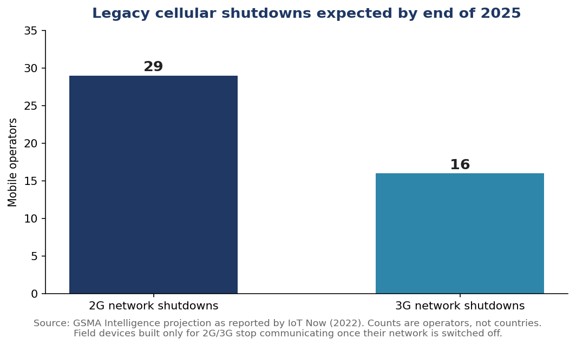
- GSMA Intelligence expected 29 operators to shut down 2G and 16 to close 3G by the end of 2025, making LTE or 5G the safe baseline for new routers.
- • LTE Cat 4 covers most telemetry and SCADA traffic, while 5G is the better fit for video, dense sensor sites and the longest service life.
Remote infrastructure has a connectivity problem that fiber alone cannot solve. Pumping stations, roadside cabinets, solar sites, water tanks and temporary construction yards are often miles from the nearest wired network, yet operators still need live data from them. For many of these sites the answer is an industrial cellular router, a device that has quietly become one of the workhorses of operational networks. This explainer covers what the device does, how it differs from a standard router, and what to check before choosing one.
What is an industrial cellular router?
An industrial cellular router is a networking device that connects field equipment to a wider network over cellular links such as LTE, LTE-Advanced or 5G, and is engineered for ruggedness, extended temperature ranges and industrial protocols rather than office use. In practice, the router sits between local equipment (an RTU, a PLC, a smart meter concentrator, a CCTV camera) and the operator’s control center, carrying data back over a mobile network instead of a leased line.
The category spans a wide range of capability. At one end are compact LTE Cat 4 units suited to low-bandwidth telemetry; at the other are 5G models with standalone (SA) and non-standalone (NSA) support, Wi-Fi 6 and Bluetooth. A current overview of one industrial router family shows how wide that span has become, from LTE Cat 4 to full 5G SA/NSA in the same product line.
How is an industrial cellular router different from a consumer or office router?
The difference is environmental and protocol-level: an industrial cellular router is built to survive heat, cold, vibration and dust, and it speaks the serial and industrial protocols that field equipment uses. A home or office router assumes a clean, climate-controlled shelf and Ethernet-connected laptops. A field router assumes a sealed cabinet in direct sun, a DC power feed, and an older RTU that only talks over RS-232 or RS-485.
Typical industrial features include DIN-rail mounting, ruggedized enclosures, serial interfaces, digital I/O ports, USB and GPS. GPS is not a luxury feature here: it lets operators confirm the physical location of mobile or temporary assets and time-stamp events. Security is the other major difference. Field routers usually ship with built-in firewalls and VPN support (commonly IPsec and OpenVPN) because they carry SCADA traffic across public mobile networks, where an unprotected link would expose control systems to the internet.
Why does dual-SIM failover matter so much in the field?
Dual-SIM failover keeps a remote site online when one mobile operator’s network degrades or drops, by automatically switching to a second SIM on a different network. For unattended sites, the cost of a lost link is rarely the data itself; it is the truck roll needed to diagnose the outage. A router that can fail over between two SIMs, and between cellular and a wired interface where one exists, removes most of those visits.
Fallback across radio generations works on the same principle. Many LTE routers can drop to 3G or 2G when LTE coverage is weak, which helps in rural areas. That fallback, however, is becoming less dependable as legacy networks close, and planners should treat it as a bonus rather than a core part of the resilience design.

How are 2G and 3G shutdowns changing router selection?
2G and 3G shutdowns are pushing operators to specify LTE or 5G as the primary radio for any new industrial cellular router, because devices built only for legacy networks stop working entirely once those networks are switched off. GSMA Intelligence projected that 29 operators would shut down 2G and 16 would close 3G by the end of 2025, with Taiwan the first market to retire both. Survey work by James Brehm & Associates put the share of cellular IoT devices still running on 2G or 3G at 53.1 percent at the time of its 2019 study.
The practical takeaway is a lifecycle one. Industrial equipment often stays in service for a decade or longer, so a router bought today should be chosen for the network that will exist in 2035, not the one that exists now. That argues for at least LTE Cat 4, with 5G worth the premium wherever video, high-rate sensor data or long service life is expected.
When does 5G make sense for an industrial router, and when is LTE enough?
LTE is enough for most telemetry, metering and SCADA polling, which move small amounts of data; 5G makes sense when a site carries video, aggregates many devices, or needs the longest possible service life on modern networks. A compact LTE Cat 4 router delivers cellular throughput of up to 150 Mbps, which is far more than a substation RTU or a tank-level sensor will ever use. One compact LTE Cat 4 design pairs that throughput with 2.4 GHz Wi-Fi and dual SIMs in a small DIN-rail footprint, which is typical of the class.
Video changes the math. CCTV and surveillance at remote sites, real-time remote camera control, and sites that act as a local hub for dozens of sensors all benefit from the extra capacity and lower latency of 5G. A 5G SA/NSA router with Wi-Fi 6 and Bluetooth illustrates what the upper tier now includes: tri-band Wi-Fi at 2.4, 5 and 6 GHz, four 5G antenna ports, serial connectivity and GPS in one ruggedized unit.
| Requirement | LTE Cat 4 router | 5G SA/NSA router |
| SCADA polling, metering, alarms | Well suited | Capacity to spare |
| Multi-camera CCTV, video analytics | Limited | Well suited |
| Many local sensors aggregated at one site | Workable at small scale | Well suited |
| Longest expected service life on public networks | Good | Best |
| Lowest unit cost and power draw | Usually better | Usually higher |
What should be on a selection checklist for an industrial cellular router?
A practical checklist covers five areas: radio generation and bands, physical ruggedness, interfaces and protocols, security, and remote manageability. Each one maps to a failure mode that field teams already know well.
- Radio and bands: confirm the model supports the LTE or 5G bands used by the operators in the deployment region. Industrial routers are often sold in regional variants (North America, Europe, Oceania) for exactly this reason.
- Ruggedness: check the rated temperature range, the enclosure, and DIN-rail mounting against the actual cabinet conditions, not the brochure average.
- Interfaces: count the serial ports (RS-232 and RS-485), Ethernet ports and digital I/O needed by the equipment already on site.
- Security: require a built-in firewall, IPsec or OpenVPN, and remote access over SSH and HTTPS rather than unencrypted management.
- Manageability: look for cloud or platform management, over-the-air firmware updates and remote diagnostics, so that a fleet of hundreds of routers can be maintained without site visits.
Where are industrial cellular routers deployed today?
Industrial cellular routers are deployed wherever operational data has to travel from a site without reliable wired connectivity, most commonly in utilities, oil and gas, water, smart cities and transportation. Common jobs include backhauling asset monitoring data, carrying SCADA communications from remote substations and wellheads, connecting traffic and surveillance cameras, and giving temporary sites (construction, events, emergency response) a network within hours.
Asset monitoring is the fastest-growing of these. Instead of sending technicians on scheduled rounds, operators place sensors on pumps, transformers, tanks and towers and read them continuously. The router is the link that makes that data usable. Coverage of remote asset monitoring deployments shows how cellular routers and IoT gateways are typically combined in these projects, with the router handling backhaul and the gateway handling local sensor aggregation.
Frequently Asked Questions
What is the difference between an industrial cellular router and an IoT gateway?
An industrial cellular router mainly provides secure backhaul from a site over LTE or 5G, while an IoT gateway focuses on collecting and translating data from local sensors and devices; many deployments use both.
Do industrial cellular routers need a fixed public IP address?
Not necessarily, because most industrial cellular routers build an outbound VPN tunnel (such as IPsec or OpenVPN) to a central hub, which avoids exposing the site directly to the internet.
Is LTE Cat 4 fast enough for SCADA and metering?
Yes, LTE Cat 4 offers up to 150 Mbps, which is far more capacity than SCADA polling, alarms and meter reads typically require.
Why do industrial routers include GPS?
GPS lets operators verify the location of mobile or temporary assets and provides an accurate time reference for logging field events.