Industrial Solutions
Seedless Mini Peppers: What’s Behind the Snack-Size Produce Aisle Trend

Walk down a produce aisle today and you’ll likely find small, brightly colored peppers with no seed cavity to speak of, marketed as an easy snacking option. These seedless mini pepper varieties have become one of the fastest-growing formats in the sweet pepper category, and the trend lines behind them go back further than most shoppers realize.
Why is snack-size pepper demand rising?
Fresh bell peppers have seen one of the steadiest long-term consumption increases of any vegetable in the US. USDA farm-level availability data shows per-capita consumption climbing more or less continuously for five decades, and that growth accelerated as smaller, snack-oriented formats entered the market.
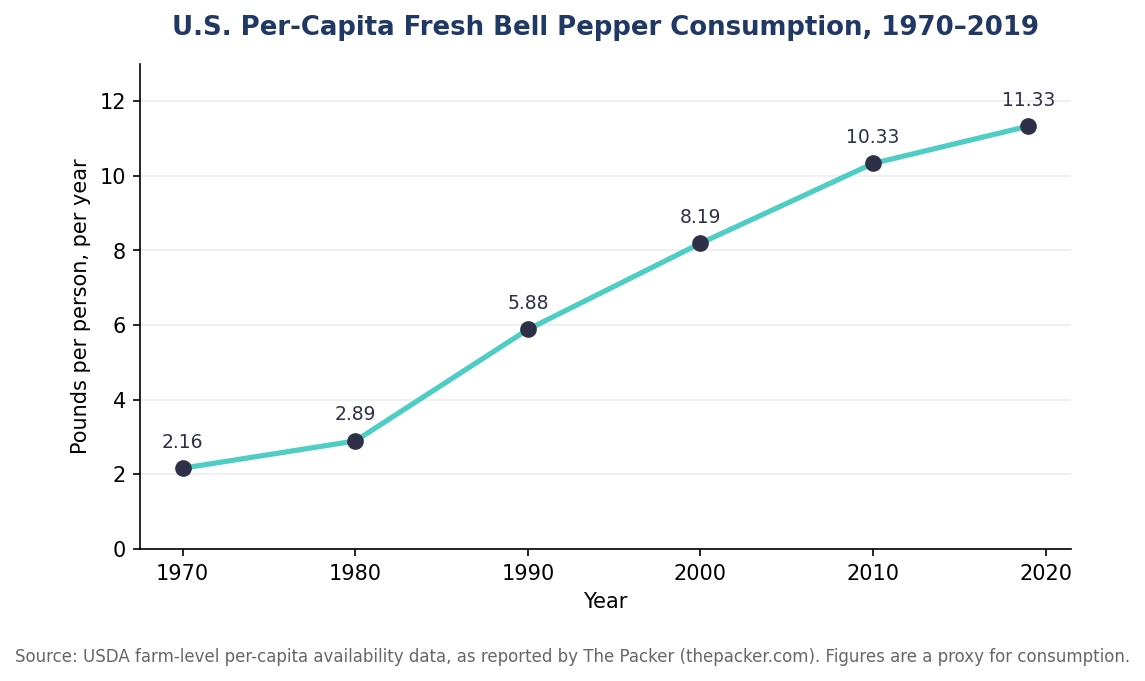

U.S. per-capita fresh bell pepper consumption has grown roughly fivefold since 1970, based on USDA availability data reported by The Packer.
What makes a mini pepper “seedless”?
Unlike a bell pepper that’s simply small for its type, a seedless mini pepper is bred to set fruit without developing a seed cavity at all. This comes from a breeding trait called parthenocarpy combined with male sterility, which together let the plant produce full, symmetrical fruit without fertilization. The practical result for a shopper is a pepper you can eat whole, straight from the bag, without the chore of halving, deseeding, and rinsing.
Are seedless mini peppers seasonal?
Because seedless varieties, including small formats like the mini-Kapia pepper format, are typically grown in greenhouse and controlled environments as well as in the field, supply tends to be more consistent year-round than for open-field-only crops. That consistency is part of what has made the category attractive to retailers looking for a reliable snacking SKU rather than a short-season specialty item.
Nutritional profile of snacking peppers
Sweet peppers, mini and full-size alike, are a genuinely strong source of vitamin C, and the amount varies meaningfully by color as the fruit ripens. USDA nutrition data for sweet peppers shows red peppers carrying substantially more vitamin C than green ones of the same type, since vitamin C content rises as the fruit matures from green to red.
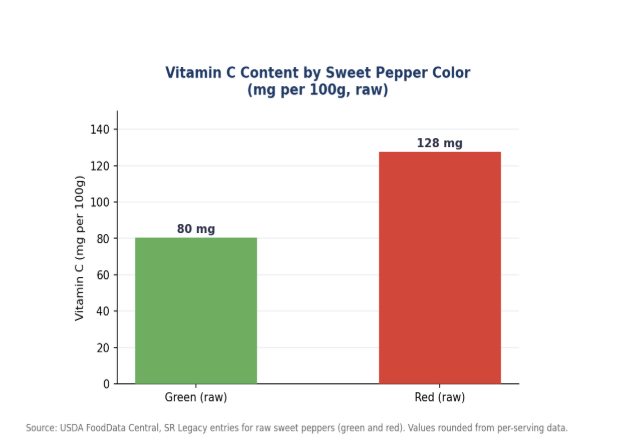

Red sweet peppers contain roughly 50% more vitamin C than green ones of the same type, per USDA FoodData Central entries.
What is driving retailers to expand this category?
Retail category managers have historically treated bell peppers as a cooking ingredient rather than a standalone snack. The rise of seedless mini formats has shifted that positioning, since a small, no-prep pepper competes more directly with baby carrots, grape tomatoes, and other grab-and-go produce than with a full-size bell pepper destined for a stir-fry. That repositioning matters commercially because snacking-category produce items tend to carry different margins and shelf placement than cooking-ingredient vegetables, giving retailers an incentive to expand shelf space for the format as consumer awareness grows.
How are seedless mini peppers typically packaged?
Because the appeal of the category rests heavily on convenience, packaging tends to emphasize grab-and-go formats: resealable bags, multi-color mixed packs, and single-serving portions aimed at lunchboxes and snack trays. This is a notable departure from how bell peppers have traditionally been merchandised, typically loose or in simple mesh bags sold by weight. The format shift reflects a broader pattern in produce retail, where smaller, pre-portioned packaging has expanded across categories like snacking tomatoes and baby cucumbers as well.
What should shoppers know before buying seedless mini peppers?
Color is a reasonably reliable guide to ripeness and flavor profile in sweet peppers generally: green peppers are harvested earlier in the ripening cycle and carry a slightly more vegetal, less sweet flavor, while red, orange, and yellow peppers are allowed to fully ripen and tend to taste sweeter. This holds true across both seeded and seedless formats. Shoppers looking for the sweetest possible snacking experience typically do better selecting fully colored red, orange, or yellow mini peppers rather than green ones, regardless of which specific variety or brand is on the shelf.
How does this format fit into a broader healthy-snacking shift?
The growth of seedless mini peppers has tracked alongside a broader retail shift toward convenient, whole-food snacking options, as shoppers look for alternatives to processed snack foods that still fit into an on-the-go lifestyle. Sweet peppers compete in that space against other low-prep produce like snap peas, baby carrots, and grape tomatoes, all of which share the same basic value proposition: little to no preparation required, and a favorable nutrition profile relative to packaged snack alternatives. Because sweet peppers carry meaningfully more vitamin C per serving than most of those competing snack vegetables, the category has a genuine nutritional argument to make alongside its convenience story.
For school lunch programs and workplace wellness initiatives specifically, the appeal of a seedless format is amplified by practical logistics: no knives or cutting boards are needed to portion a mini pepper for a lunchbox, which matters in settings where food preparation time and equipment are both constrained. That practical fit has helped seedless mini peppers gain traction in institutional foodservice channels alongside traditional grocery retail.
Frequently Asked Questions
Do seedless mini peppers need to be refrigerated?
Yes, like most fresh sweet peppers, they keep best refrigerated and are typically sold and stored in the produce cooler section.
Are seedless mini peppers more expensive than regular bell peppers?
Pricing varies by retailer and season, but snack-size seedless formats are often positioned as a premium, convenience-oriented product relative to standard bell peppers.
Can seedless mini peppers be cooked, or are they only for snacking?
They can be used in cooking the same way as any sweet pepper, though their small size and lack of seed cavity make raw snacking and stuffing especially convenient uses.