Marketing & Analytics
Kapia Pepper: The Sweet, Elongated Variety Winning Over Retailers and Consumers


Introduction
Not all peppers are created equal. While blocky bell peppers dominate the mainstream fresh market, a growing segment of buyers and consumers is discovering the distinct appeal of the kapia pepper – an elongated, thin-walled, intensely sweet variety with origins in Central European cuisine. Today, it is one of the fastest-growing sweet pepper categories in specialty and premium produce retail. Breeders and growers who recognize this trend early stand to capture significant market share, and companies like BreedX are leading its commercial development.
What Is a Kapia Pepper?
The kapia pepper (also sometimes spelled ‘copia’ or ‘kapija’) is a long, tapered sweet pepper with a characteristic rich red color when fully ripe. Unlike blocky bell peppers, kapia peppers have a thinner wall and a higher sugar content, giving them a distinctly sweet, almost fruity flavor. They are excellent for eating raw, roasting, or using in cooked dishes.
From a breeding perspective, the kapia pepper presents unique opportunities. Its shape, sweetness, and visual appeal make it a standout in the crunchy red peppers segment, where consumers seek peppers that deliver both taste and texture. The mini-kapia format – a smaller, snack-sized version – has further expanded the variety’s commercial reach.
The Mini-Kapia: Snack Culture Meets Premium Produce
Consumer trends toward snacking and healthy eating have created a massive opportunity for smaller-format peppers. The mini-kapia sits at the intersection of these trends – it is naturally small, intensely sweet, crunchy, and visually attractive. Retailers can position it as a premium snack item, while foodservice operators use it as a garnish, appetizer ingredient, or standalone snack.
BreedX’s development of mini-kapia pepper varieties reflects the company’s focus on market-relevant innovation. Their varieties are bred for consistent sizing, high Brix (natural sweetness), and shelf stability – key requirements for retail success. By combining the traditional appeal of the kapia pepper with modern breeding advances, they have created a product that meets both grower and retailer demands.
Nutritional Value of Kapia Peppers
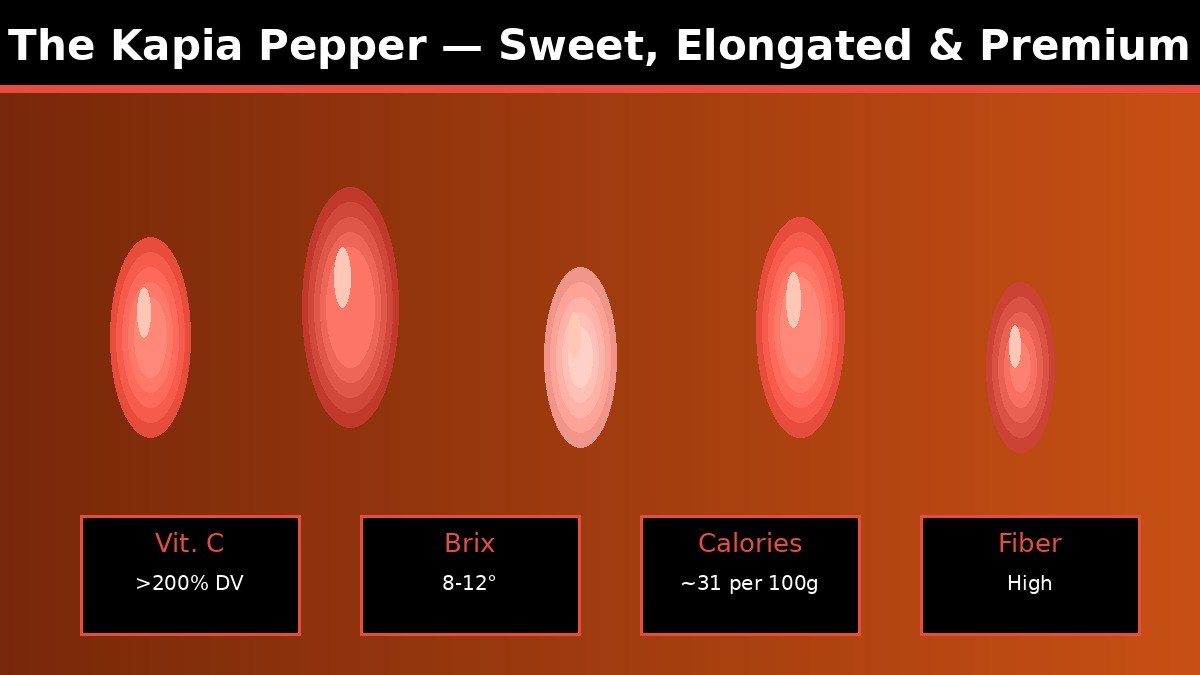
Sweet peppers in general – and kapia varieties in particular – are among the most nutrient-dense vegetables available in the fresh produce section. Their high vitamin C content (often exceeding that of citrus fruits), combined with a significant amount of vitamin A, antioxidants, and dietary fiber, makes them an ideal choice for health-conscious consumers.
According to Wikipedia’s entry on sweet peppers, sweet peppers are rich in carotenoids and ascorbic acid, particularly when fully ripened to red. This nutritional profile reinforces the value proposition of red kapia peppers in premium and organic retail environments.
Key nutritional highlights of red kapia peppers:
- High vitamin C content – often more than an orange per serving
- Rich in beta-carotene, which converts to vitamin A
- Naturally low in calories while high in dietary fiber
- Contains capsanthin and other antioxidant carotenoids
- No cholesterol and minimal sodium
Retail Positioning: Standing Out in the Pepper Category
For retailers and category managers, the kapia pepper offers a clear differentiation opportunity. The conventional sweet pepper section is dominated by blocky red, yellow, and orange varieties. Adding mini-kapia or long-kapia peppers creates visual variety, draws consumer curiosity, and supports premium pricing.
Packaging innovation plays a role here as well. Mixed snack trays featuring mini-kapia alongside other mini sweet pepper varieties create a compelling, colorful product that commands higher margins and appeals to snacking-focused shoppers. Growers who cultivate kapia varieties have reported strong demand signals from both retail chains and specialty food distributors.
| Characteristic | Kapia Pepper Profile |
| Shape | Elongated, tapered |
| Flavor | Sweet, fruity, low heat |
| Color at maturity | Deep red |
| Wall thickness | Thin to medium |
| Best use | Raw snacking, roasting, grilling |
| Key market segment | Premium, specialty, snack |
Growing Kapia Peppers: What Growers Should Know
Kapia peppers are well-suited to both greenhouse and open-field cultivation, though greenhouse growing allows for more consistent sizing and extended harvest windows. Like other sweet pepper varieties, they thrive in warm, well-drained soils with consistent irrigation. Breeders have developed disease-resistant kapia lines that reduce crop losses from common pathogens such as powdery mildew and bacterial spot.
Harvest timing is critical for kapia peppers. While they can be harvested green, the variety’s commercial value is highest when fully ripe – the deep red color and maximum Brix levels align with consumer expectations and retail standards.
Conclusion
The kapia pepper is no longer a niche variety for specialty markets — it is becoming a mainstream premium product with real commercial momentum. For growers looking to diversify and retailers seeking differentiated produce, the kapia pepper represents a compelling opportunity. BreedX’s portfolio of innovative pepper varieties – including mini-kapia lines – provides the quality, consistency, and breeding support that modern supply chains require. As the market for sweet, crunchy, snackable peppers continues to grow, kapia peppers are well-positioned to be among the most valuable entries in the category.